
Wedding photography / Concept and preparation
Popular outdoor shooting concepts
You may love a beach photo but not want to walk on the sand. Or maybe you like a historic courtyard but don't want your album to look too formal. Choosing a concept starts with discussing these differences.
Compare 10 outdoor photo concepts for more than their looks: consider light, outfits, movement and small practical details on the shoot day. Turn a collection of saved favourites into a workable shortlist.
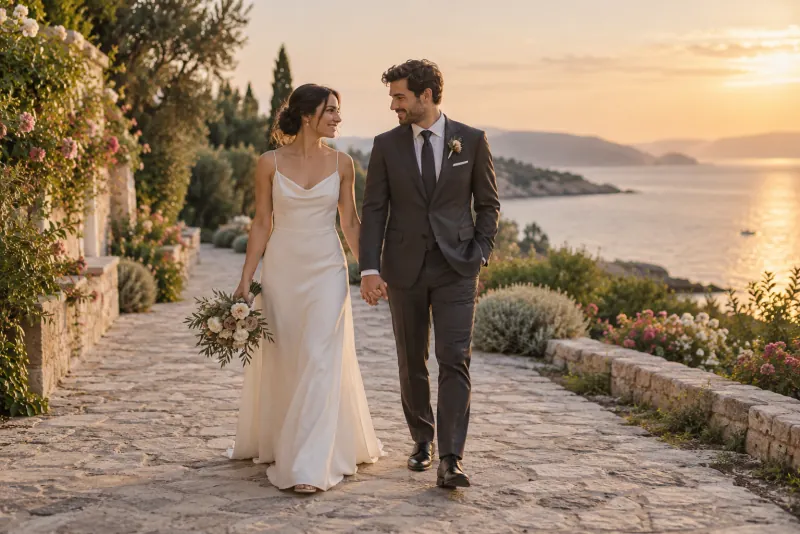
Start with the photographic style, not the location's name
“Bohemian” describes a style, “lakeside” describes a place, and “sunset” describes a time of light. They do not have to be alternatives to each other: a simple and modern shot can also be taken by the lake. The following selection brings these ideas together; the numbers are not a sales or preference ranking.
How would you like to look?
Choose three reference photographs. Say what you like in each: the dress's movement, a close-up portrait or the uncluttered background. This gives your photographer a clearer brief than asking for an exact copy.
How will you act?
Consider the skirt of the wedding dress, the comfort of the suit and the walking distance with the shoes. Even just the plain entrance of a place you love may be sufficient.
How far will you travel?
Getting out of preparation, traffic, parking and walking are also included in the program. If there is a ceremony on the same day, take the realistic transportation allowance as basis, not the farthest point.
If you haven't chosen your view yet wedding dress cuts, groom's suit models and hairstyles to consider with a veil too. Choose a photo location where you can comfortably wear these options.
10 wedding outdoor shooting concepts
First, choose two titles that resonate with you. Then look not only at the photo, but also at the preparation note underneath. The same concept can look completely different in different seasons with a different outfit.
1. Sunset on the beach
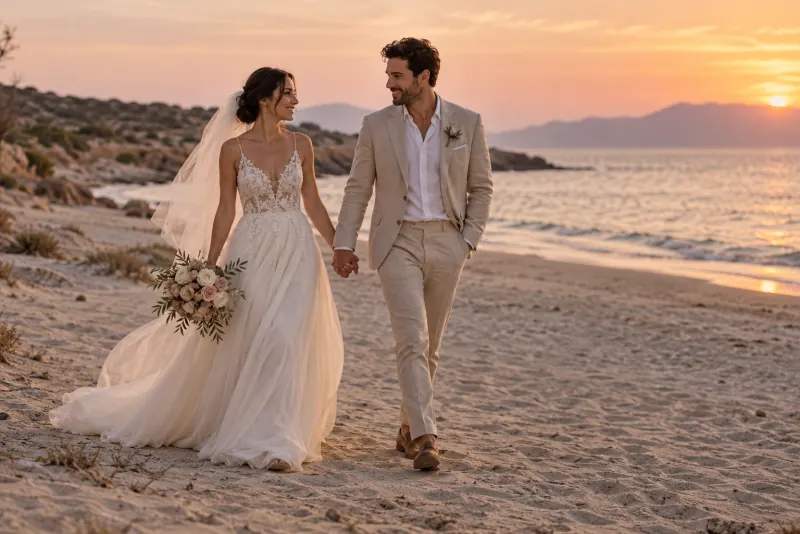
Light, lively, warm
Let the sea stay in the background; you do not have to build the whole shoot around walking into the waves. A short walk along the shore, a moment talking face to face and a wide shot from a distance can offer plenty of variety.
A flowing skirt or short veil makes movement visible. You can also photograph a heavier dress on the beach, but check the ground you will walk on beforehand. A pose that wets the suit's trouser hems will also affect the close-up portraits a few minutes later. Stay on dry ground if you want to protect your outfits.
Light note: Plan the timing and direction of the sun with your photographer for warm light near sunset; the sun does not set over the water at every beach.
Check beforehand: Wind, walking on sand and crowds along the shore. Rule out poses that require unsafe rocks or entering unsafe water.
2. Scenic walk in the forest
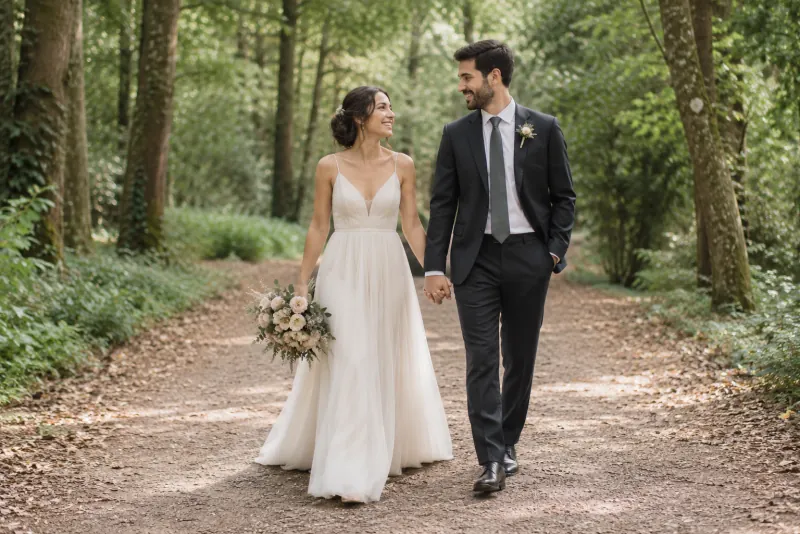
Calm, green, friendly
A path between trees is a useful starting point for couples unsure how to pose. Think of small movements: walking side by side, pausing to look at each other or gathering the dress's skirt together.
Instead of multiplying the accessory, highlight the texture of the outfit. Lace, plain crepe or a simple suit looks different with a green background; you don't have to put them all in the same "jungle style". The fact that the ground is dry and walkable may be a more important choice than the type of tree in the photo.
Light note: Instead of the sun falling in patches on the face, look for a more even spot of shadow. Let your photographer evaluate the green reflection and skin tone.
Check beforehand: The slope of the path, mud and branches catching on clothing. Confirm with the operator or authorized unit that the forest area is open and shooting is allowed.
3. Flowery garden
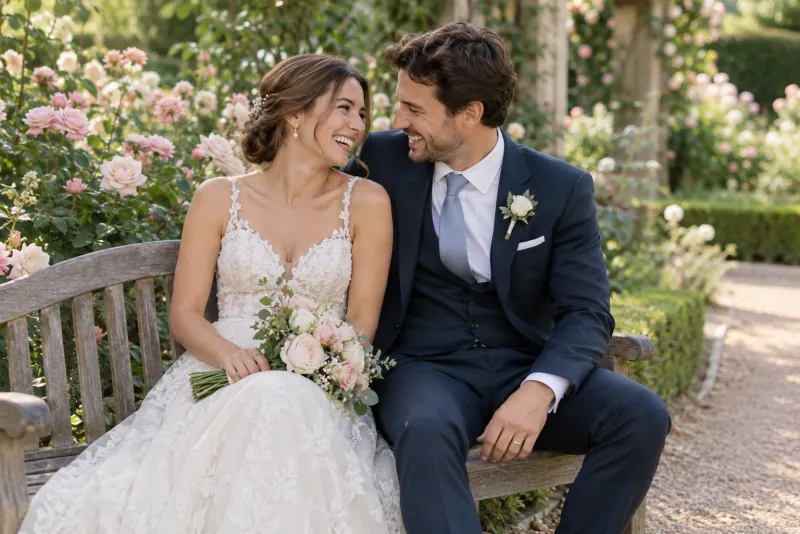
Soft, colorful, romantic
Instead of placing every flower in the same frame in the garden, choose a color family. While cream and powder tones create a calmer background, vibrant flowers can change the center of gravity of the photo. You can also complete the frame with a small bouquet.
Arranging directly in front of the flowers is not the only option. The walk along the road, the close-up portrait where the flowers are blurred, and the wide angle showing the garden establish three separate narratives at the same point. If your wedding dress has heavy embroidery, you may want to keep the background a little plainer.
Light note: Make sure not only that the flowers are bright, but also that their faces receive appropriate light. A shaded walking path may be an alternative during harsh sun hours.
Check beforehand: Ask for current status of bloom with recent photo. Maintenance, irrigation, visitor density and professional shooting rules may change the plan.
4. Bohemian in the countryside
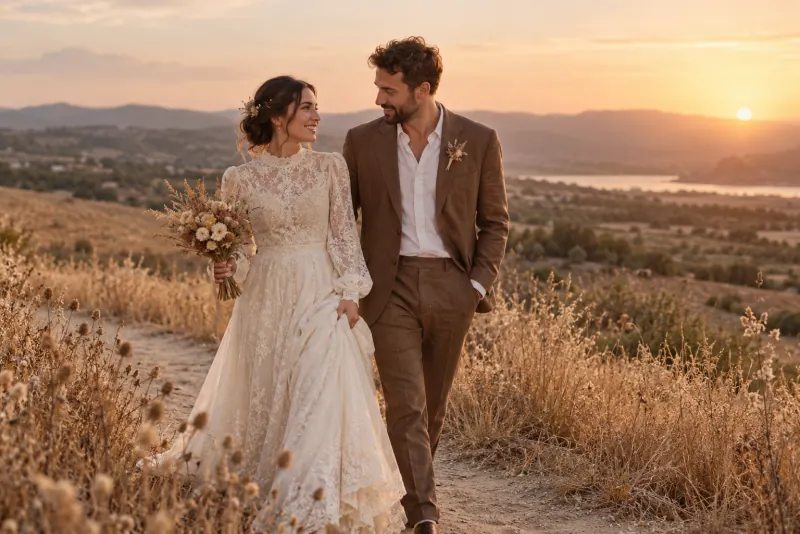
Relaxed, textured, earthy
It's not necessary to carry a car full of decor to create the bohemian look. Fluid fabric, a textured bouquet and a natural backdrop already convey enough character. If dry grass covers most of the photo, do not use the hat, rug and large flower arch at the same time.
Plan together a close-up shot showing the pattern of the lace and a wider shot showing the movement of the skirt. Having the suit in earth tones is an option; it's not a necessity. Having both of you feel comfortable in your own outfits is a better start than following the theme exactly.
Light note: Sideways evening light can highlight the texture of grass and fabric. Do a brief reconnaissance beforehand for the horizon and background.
Check beforehand: Do not enter fields or private land without permission. Leave the setting natural rather than using candles, torches or smoke effects among dry grass.
5. Historical stone architecture
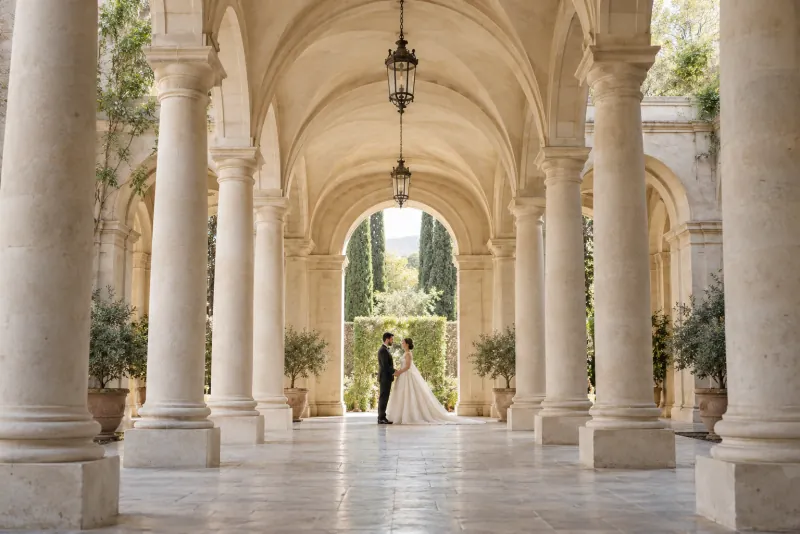
Classic, textured, timeless
Arches, stone walls and courtyards naturally frame a photograph. In a setting like this, focus on your posture and the silhouette of your outfits rather than elaborate decorations. You could ask for a wide shot showing the architecture, followed by portraits against a simpler wall.
A long train and veil can look striking on a well-defined staircase, but make sure you can move safely on every step. A flowing dress or simple civil-ceremony outfit also works with stone architecture. Do not let an imposing setting push you into poses that feel too formal.
Light note: The light falling on the courtyard and the shadow under the arch are different. Also ask about the time the discovery photo was taken; do not choose a time just based on the name of the venue.
Check beforehand: Professional photography permits, bookings, accessible entry and equipment restrictions. Do not assume you may lean against historic surfaces or attach decorations to them.
6. Vintage street and classic vehicle
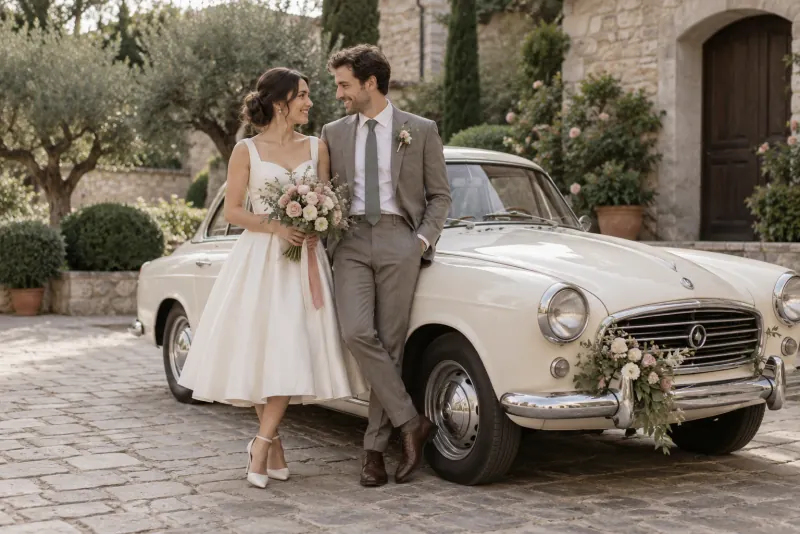
Nostalgic, elegant, playful
Vintage does not have to mean an old car. A quiet street, a doorway with period character or a simple courtyard can create the same mood. If you plan to use a car, first decide whether you really want it in your photographs; sometimes the best shot is a few steps away from it.
A midi length wedding dress, short veil or a suit with a softer tone may suit this story. You don't have to match all the pieces like a costume, though. Discuss in advance which poses are allowed, such as sitting in the vehicle, opening the door, or standing next to it.
Light note: Request a test frame to make the dark vehicle body and white suit look balanced in the same frame. Nostalgia can be established without overly aging the color arrangement.
Check beforehand: Vehicle supply, waiting time, usage permit and safe parking area. Do not pose on public roads or in moving vehicles.
7. Minimal shots in modern architecture
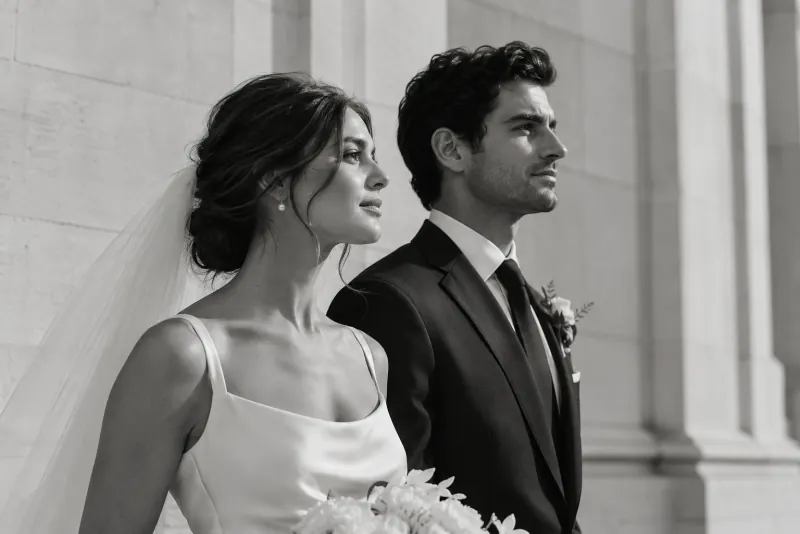
Clean, graphic, understated
A plain wall, open space and two strong silhouettes. A minimalist concept keeps the background quiet, drawing attention to the cut of your outfits and the space between you. Keep it in mind when comparing simple satin, crepe and sharply tailored suits.
Both a mutual portrait and a wide shot where you are smaller in the architecture can be taken in the same place. If you do not want all the photos in the album to be from the same distance, say so before shooting. A single black-and-white series can also be added; There is no need to think of black and white as a separate type of space.
Light note: If you specifically want the sharp shadow, plan it as a design element. If you want a soft portrait, find a facade on the same building that receives more even light.
Check beforehand: Exterior access, private property rules and pedestrian traffic. The information “The building is visible from the outside” does not mean that all equipment and shooting are free.
8. Quiet moments by a lake
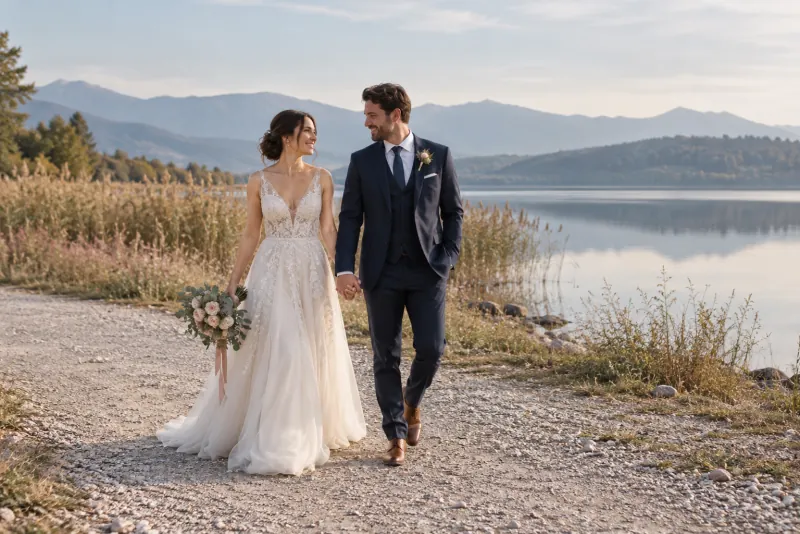
Serene, spacious, simple
The lake gives a different rhythm than the sea: a more tranquil backdrop, reeds and an open horizon. To keep the scene calm, alternate stances between the two of you rather than using lots of props. You can say you want reflection; But don't expect the water to look the same like a mirror every day.
You don't have to go to shore. A wide, dry road taking the lake to the back can offer the same atmosphere while preserving the wedding dress. If you want a photo of the pier, the carrying capacity, ground and entry permit should be checked separately. Do not move to a risky spot just for a reference photo.
Light note: Wind changes the appearance of the water. A calm morning is a lovely possibility, not a guarantee of a perfect reflection or an empty shore.
Check beforehand: Safety of the water's edge, slippery ground and weather. If you're choosing a plateau, find out the check-in time, the actual shooting area, and how many crews are working at once.
9. Field of lavender and flowers
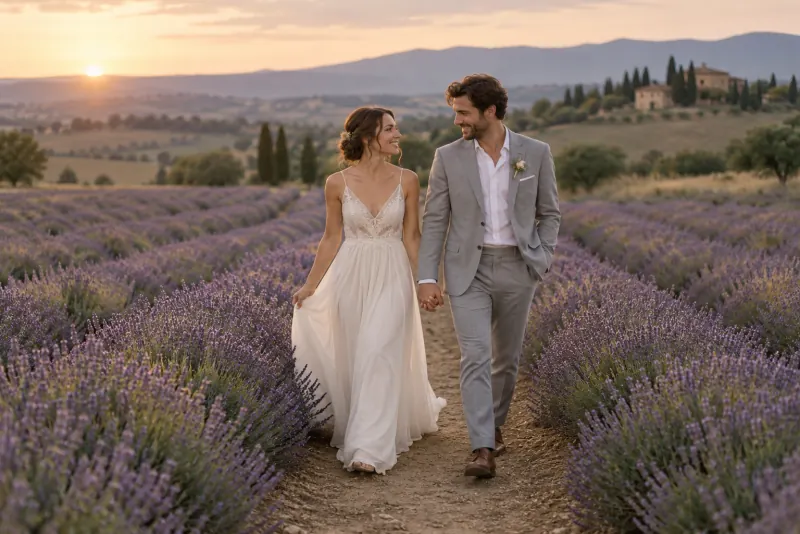
Colorful, rhythmic, summery
Rows of flowers give the photo regular lines and strong color. The best start is to request updated images close to the shooting date, rather than assuming "this month will definitely be purple". Flowering and harvest status may differ from the photo in the catalogue.
A cream bouquet, simple outfit or a single small accessory can offset the purple background. Instead of sitting among the flowers, plan a walk on designated paths. You both protect the production area and reduce the skirt getting caught on branches. You can also find a plain background in the same location and complete close-up portraits there.
Light note: Discuss sample editing with the photographer to show off the color of the flowers without oversaturating them. The purple in your reference may not be the color of the actual field that day.
Check beforehand: Current status of the business, shooting booking, road dust and walking distance. Before entering the venue, learn the rules regarding the plants and the production area.
10. Autumn park
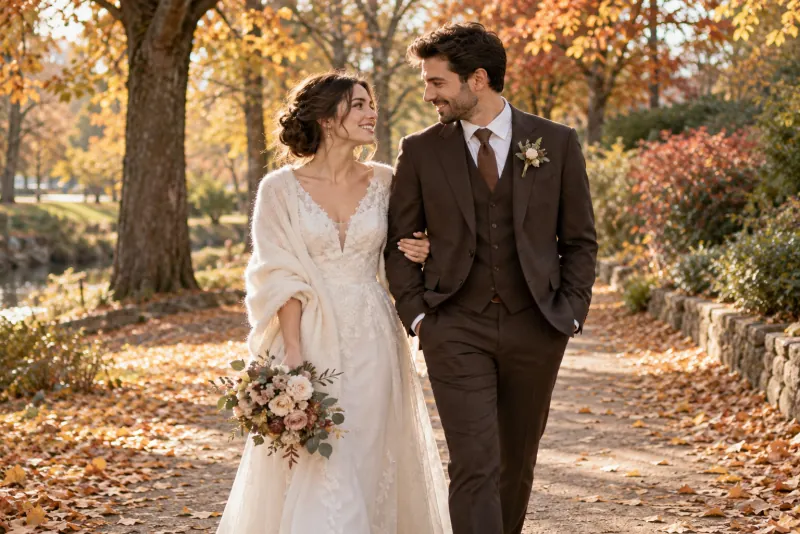
Warm, calm, seasonal
Yellow leaves, dark trunks and a soft blanket: the concept of autumn is established through color and texture. It is not possible to guarantee the exact color of the leaves to the date of photography. Therefore, choose the park by looking at its path and background, not just the color change of a week.
A shawl that you can wear over your wedding dress for short periods of time will be useful during walks; it may also be part of the photo. Dark brown or dark blue can look balanced with some warm leaves. Instead of throwing leaves in every shot, create variety with a close-up portrait and a natural walk.
Light note: An overcast sky does not automatically mean a disappointing shoot. Consider the light, rainfall and condition of the ground together.
Check beforehand: Wet leaves, slippery roads and being cold. Determine a dry staging area and backup plan if the weather deteriorates before shooting.
If you are unsure: put the concepts side by side
This table is a short first-stage comparison, not a definitive set of suitability rules. Make the final choice using conditions at that location close to your shoot date and your team's advice.
| The feeling you're looking for | Concepts to look at | Before you decide |
|---|---|---|
| Movement and open horizon | Beach or bohemian countryside | Wind, walking surface and clothing protection plan. |
| A quiet, natural backdrop | Forest, lake, autumn park | Trail, rainfall and safe waiting area. |
| Distinctive colors | Flowery garden, lavender field | Current flowering, care and entry conditions. |
| A classic album | Historical architecture, vintage | Permission, reservation and vehicle use conditions, if any. |
| Few decorations, strong silhouette | Minimal shot in modern architecture | An uncluttered background, light on the façade and access. |
Do not let an accessory take over the photograph
The bouquet and the veil are already two strong pieces. If you want to add an additional bike, hat, or prop, ask what it would do: does it have something to do with you, or would it just look good in another photo? A single personal detail often tells a clearer story than a multitude of randomly collected items.
Don't treat black-and-white editing as a separate shooting location either. You may want to see several frames with this language in the same beach or architectural shot. Talk through an example full series of how the chosen arrangement affects the skin tone, the texture of the dress, and the rest of the album.
Shooting day: a comfortable flow is as important as a beautiful backdrop
On the wedding day or a separate day?
Same-day shooting can be done while you're prepared; but requires a safe margin of time to return to the ceremony. Do not write the beginning of the photo at the same time as the end of hair and make-up. It also takes time to put on the outfit, get out of the vehicle, and walk to the entrance of the venue. Shooting on separate days can provide a wider route; This time, take into account the preparation and clothing delivery conditions again.
If you are considering a classic car for photographs, check the actual cabin as well as its appearance. Rehearsal of getting into the car in your wedding dress and sitting down add to shooting plan; on lease offer includes the photo stop and waiting time.
Choose shoes for the walking route as well as the season. Sandal and flat options for summer or closed-toe shoes and boots for winter see. If the pair of photography shoes you will use for transportation are different, check the hem length of the wedding dress with both.
Plan the light around your location
After sunrise and before sunset the light may be warmer and softer. But the “golden hour” is not a fixed appointment that lasts a full hour everywhere. The direction of the sun, surrounding buildings, season and weather change the view. Let the team tell you when you need to be available at that location; make your transportation plan accordingly.
Don't invent a backup plan photo day
Discuss a permitted covered space, a nearby alternative or another date in advance for rain or strong winds. A new location may require new permissions, extra fees and more travel time. Do not cross slippery rocks, railway tracks, traffic or unsafe waterside areas for a photograph.
- Are shooting and transportation times written separately?
- Have entry, professional photography and equipment requirements been confirmed?
- Are shoes and clothing covers suitable for hiking ready?
- Are water, small touch-up bag, bouquet and veil on the list?
- Is it clear where to move if the weather changes?
- Is it clear who will track permit and venue payment?
- Have the people who will come with you and the items to be carried been discussed?
- Have you allowed time to return to the ceremony or return hired outfits?
Questions to ask your photographer
Ask for a full series taken under similar conditions, not just a few shots you like. So you can understand what both wide location photography and close-up portraits look like. Speak scope rather than package name.
- Where and at what time will we meet at the place we choose? Will there be a reconnaissance or current light check?
- Are traveling, waiting and changing clothes included in the total time?
- Who bears the venue entrance, shooting permission and vehicle/decor expenses, if any?
- How many edited photographs will be delivered, and who chooses them?
- Are the album, high-resolution files and video priced separately?
- What is the delivery format, duration and scope of revision?
- What conditions apply if the date changes due to weather?
- How do we state our preferences about photographs being used in your portfolio or on social media?
If you are considering the venue together with the wedding celebration from the wedding venue checklist too. If the photo location and reception area are different, ask separately about transport between them.
Frequently asked questions about outdoor shooting
How do you choose an outdoor wedding photo concept?
First choose the photographic style you like: a natural walk, classic portraits or simple architecture. Then narrow it to two options based on your date, transport, movement in your outfits and venue rules. One main location and a nearby backup are often easier to manage than a long itinerary.
Should outdoor shooting be done before or after the wedding?
There is no single right day. A wedding-day shoot needs time for preparations, travel and getting to the ceremony. A separate day may allow a more flexible itinerary, but can mean arranging hair, make-up, outfits and the team again. Check these items in the quote.
What is the best time for outdoor wedding photos?
It depends on the location, season and look you want. Light after sunrise or before sunset may be warmer and softer; woodland shade, overcast skies and architectural façades work at different times. Plan for the specific location rather than relying on a fixed time that supposedly suits everywhere.
How long does outdoor shooting take?
The number of venues, transportation, clothing change and delivery expectations change the time. Ask the photographer to explain not only the total time, but also how much of it was shooting, travel and preparation. There is no valid duration for every concept.
If it rains, will the outdoor shoot be canceled?
The same decision is not made every time it rains. Assess safety, equipment and clothing conditions with the team. Discuss in advance options for a permitted covered area, another time or date change; the postponement condition should be specified in the offer.
Who gets location and shooting permissions?
Do not assume who is responsible; agree this clearly with the venue and photographer. Admission, professional photography permits, reservations and equipment requirements may be separate. If you are considering a drone, qualified people should also check current regulations and local conditions.
What to bring to an outdoor shoot?
Prepare spare shoes suitable for walking, water, a small touch-up bag, a shawl depending on the season and a protective case to carry the clothing. Add the bouquet and veil to the list. Talk to the photographer about the items you will be bringing with you and do not increase the burden of carrying them unnecessarily.
Why does outdoor shooting price vary depending on the concepts?
Beyond the photographer's fee, there may be location fees, travel, vehicle or decoration hire, extra crew and overtime. Albums, the number of edited photographs, video and delivery terms also change what is included. An itemised written quote is more useful than a single package price.