
Bridal hair / 15 styles
Bun or wave,
or a braid?
Your dress may be ready while you are still choosing between two hairstyle photographs. Start with one question: up or down? Then compare the parting, height and accessories in the same hair trial.
There are 15 options here, ranging from nape bun to short pixie cut. The length and texture of your hair and the veil you use can change how the same model will look on you.
Updo · Understated
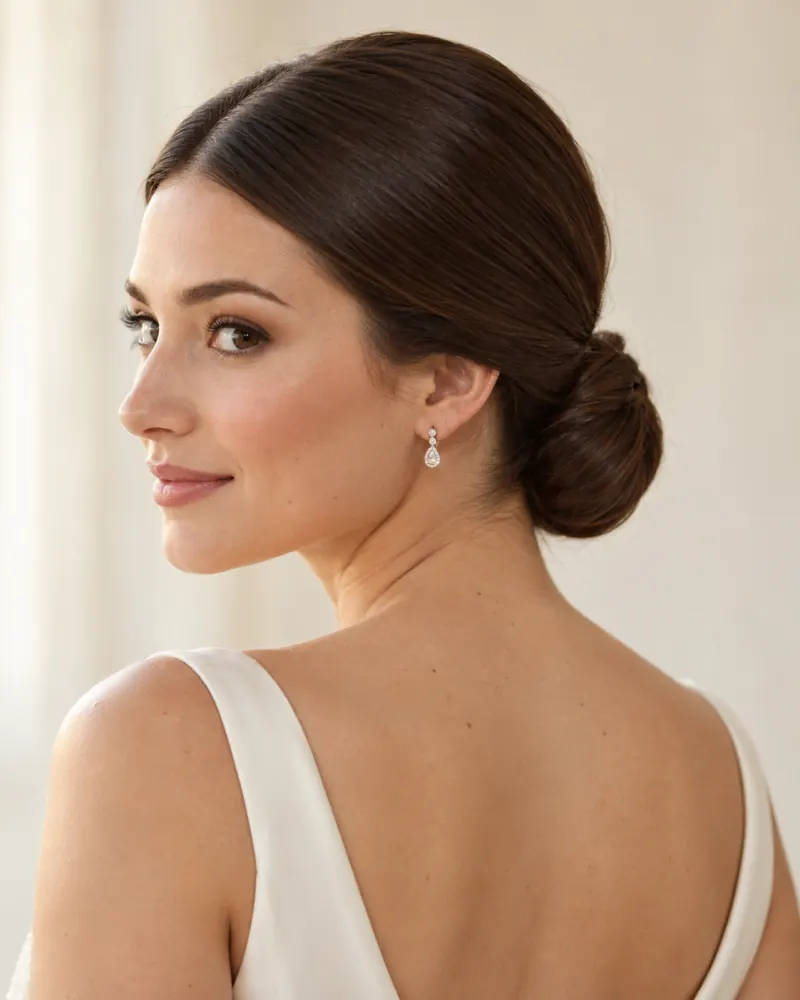
Sleek low bun
Centre-parted hair is gathered into a neat knot at the nape. The emphasis is on shine and a clean line; it looks complete even without a large accessory.
Back to models ↑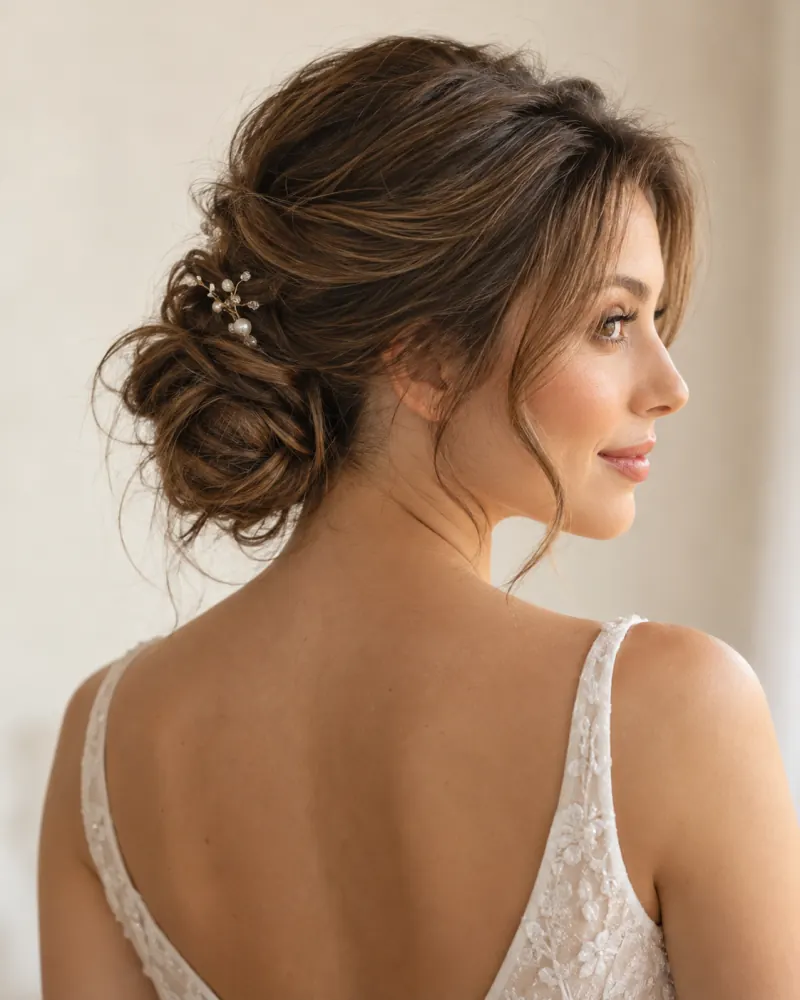
Updo · Textured
Soft tousled low bun
Loosely gathered sections near the nape create a softer bun. A few fine strands can frame the face; tousled does not mean coming apart at random.
Back to models ↑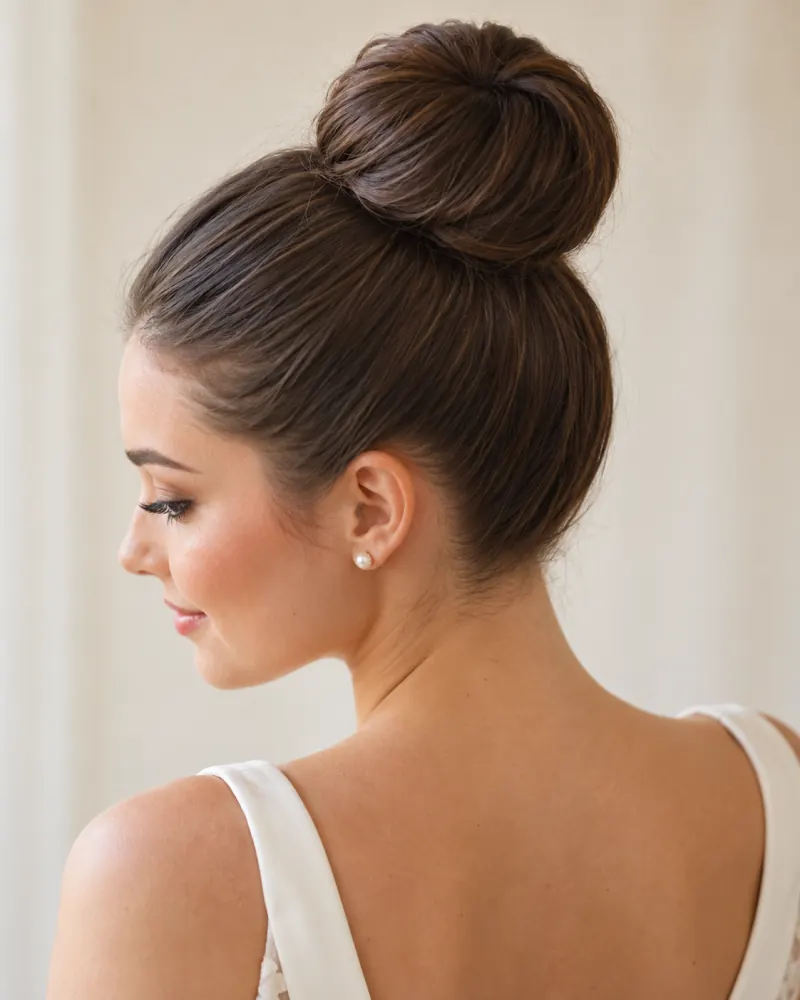
Updo · Defined shape
High ballerina bun
The hair is fixed in a round and collected form close to the crown. It leaves the nape of the neck open; it is necessary to consider the choice of veil and crown together with the height of the bun.
Back to models ↑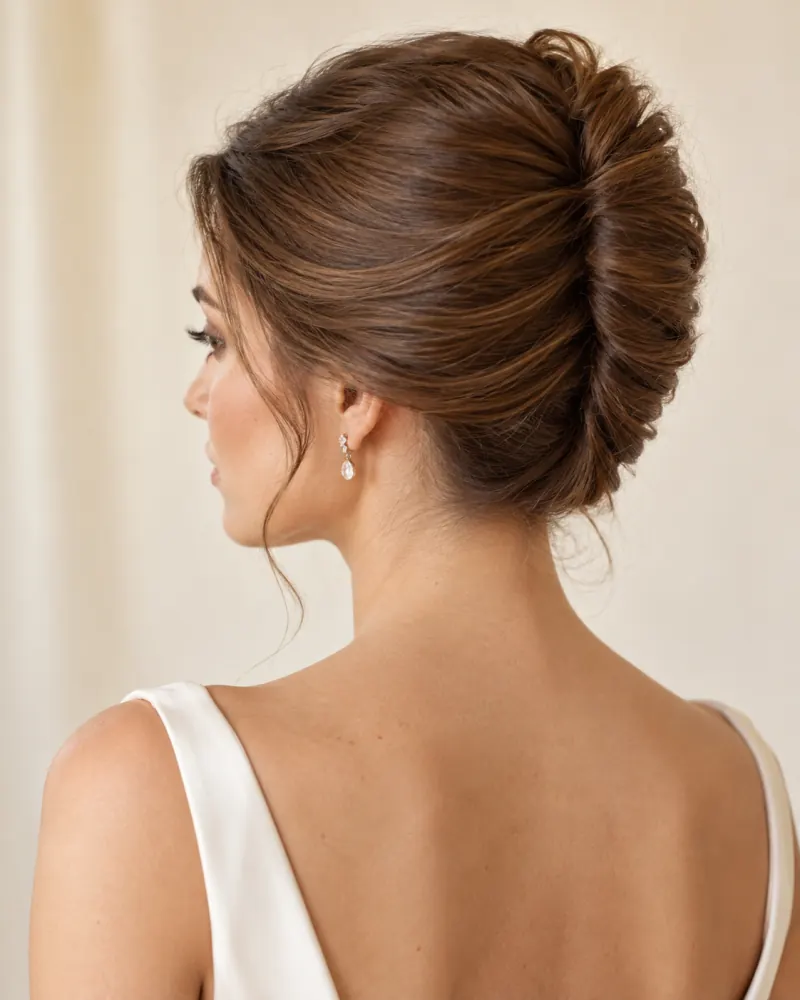
Updo · Classic
French twist
The hair is turned inward in a vertical curl at the back. Its difference from the round bun is its long, shell-like form; it can be tried with an open back or a simple collar.
Back to models ↑Clear · Prominent wave
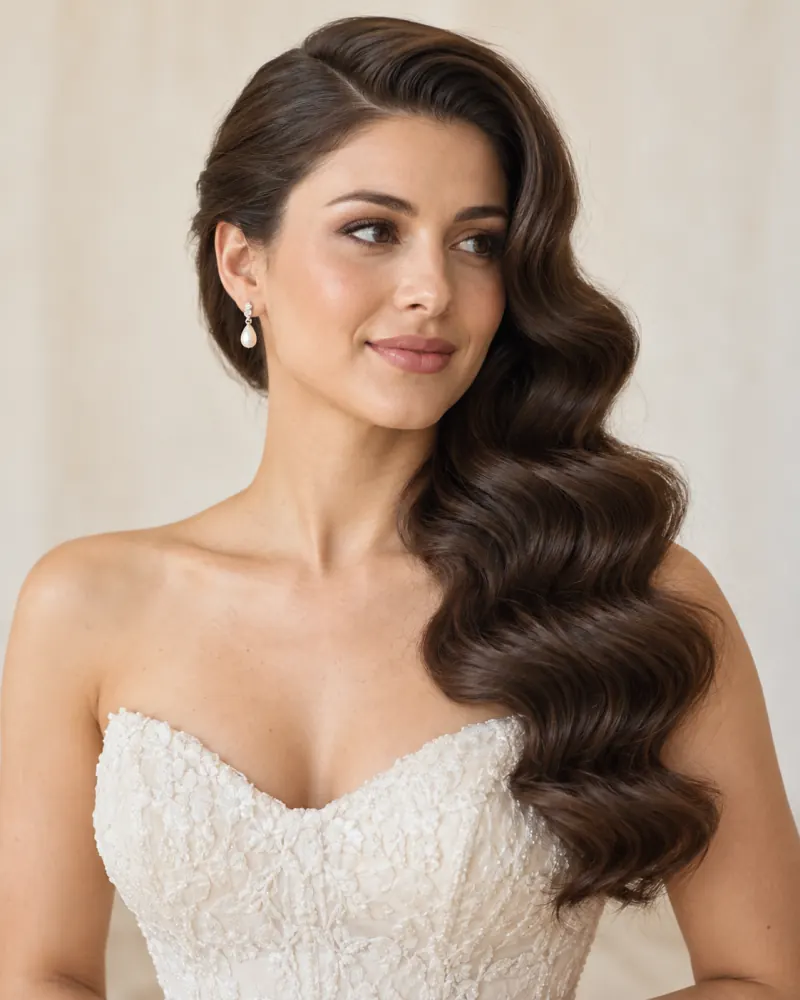
Hollywood wave
Regular S-shaped waves moving in the same direction and a defined side part are the signatures of this look. It offers a more sculpted option when you want to wear your hair down.
Back to models ↑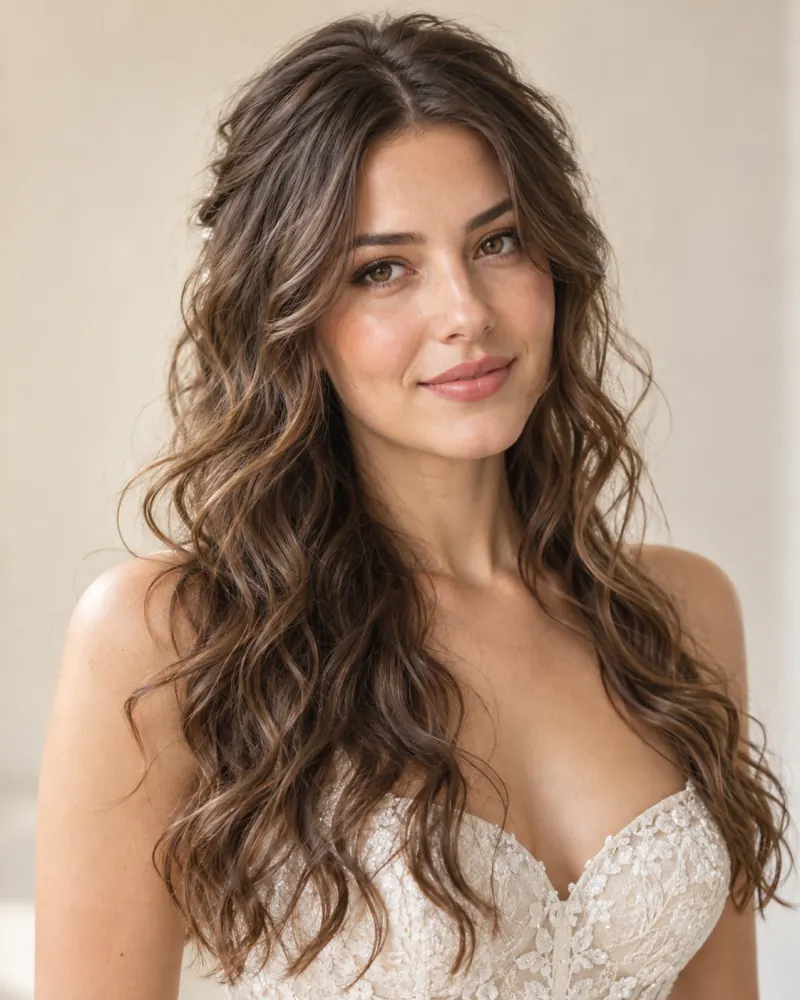
Loose · Relaxed
Soft loose waves
Wider, freer waves emphasize the movement of the hair itself. Instead of the single piece order in the Hollywood wave, more separated strands are seen.
Back to models ↑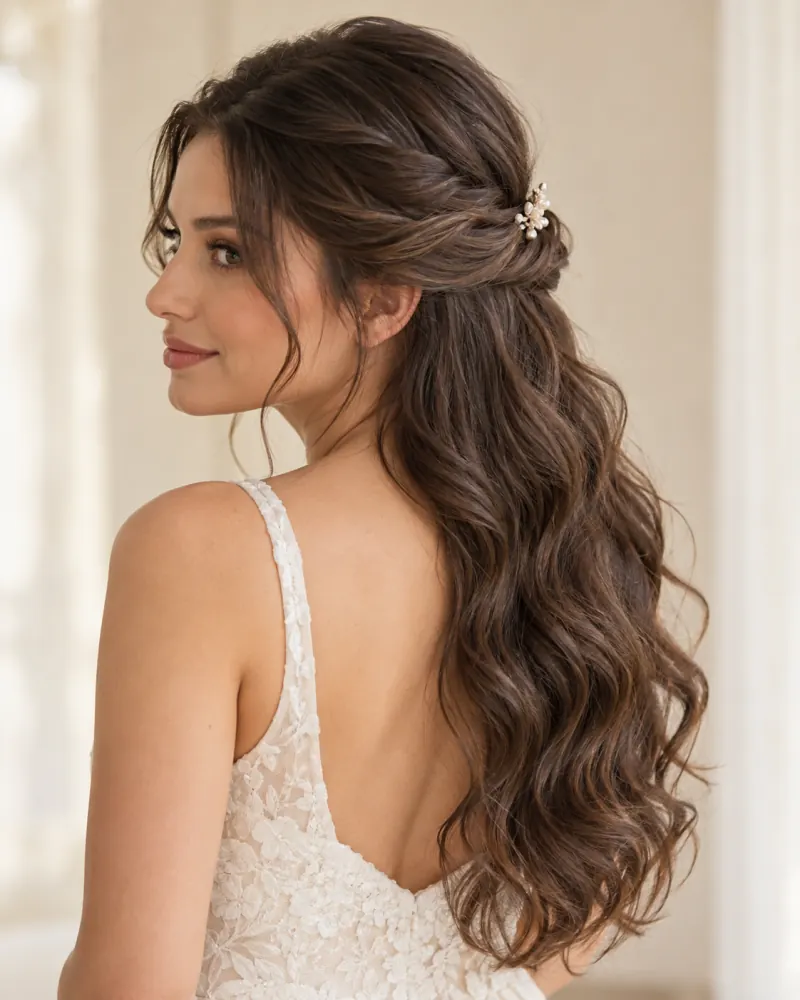
Half-up · Soft
Wavy half-up style
The upper sections are gathered at the back while the rest stays wavy. Try it if you want the feel of wearing your hair down while keeping the front away from your face.
Back to models ↑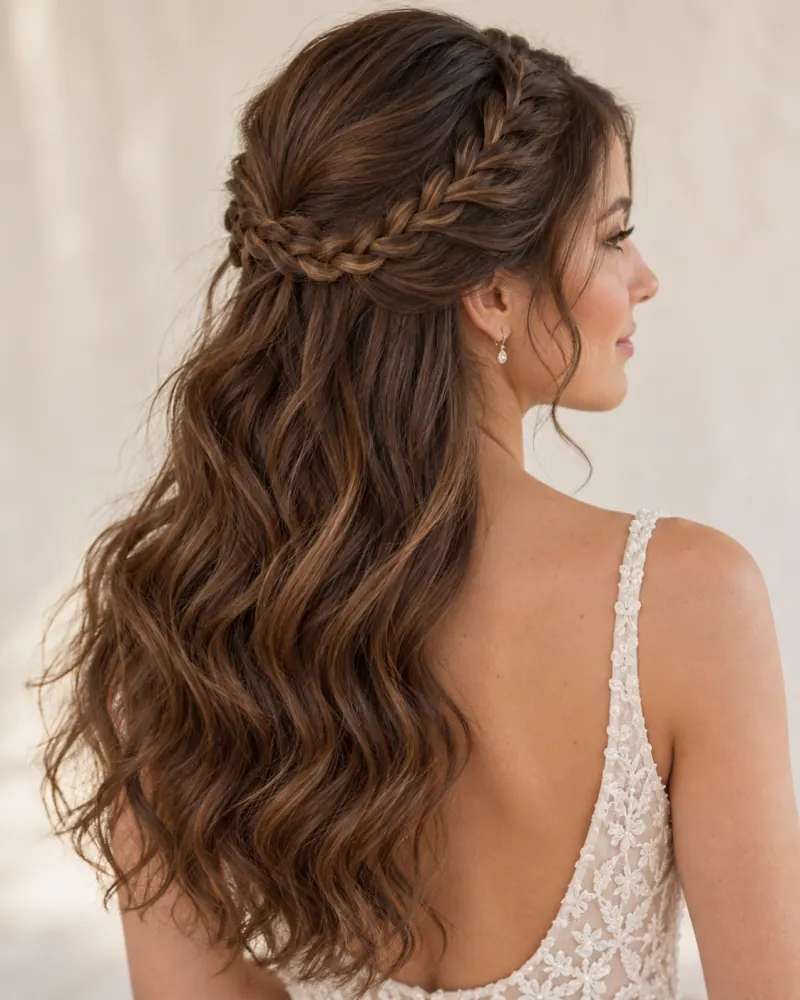
Half-up · Braided
Braided half-up style
Fine braids from the sides meet at the back, leaving the lower lengths loose. Changing the braid thickness changes the look; compare this detail in your trial photographs.
Back to models ↑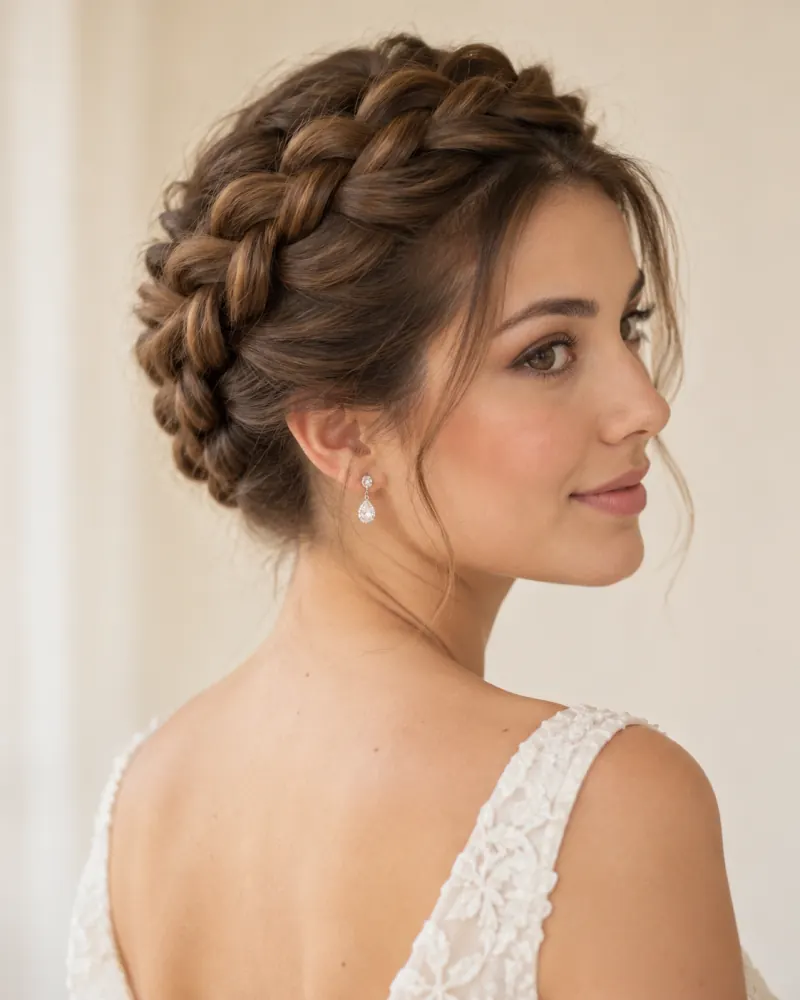
Updo · Braided
Crown braid
The braid that goes around the head creates a frame like an accessory. The braiding technique may vary depending on the length and density of the hair; it would be better not to expect the exact volume in the image.
Back to models ↑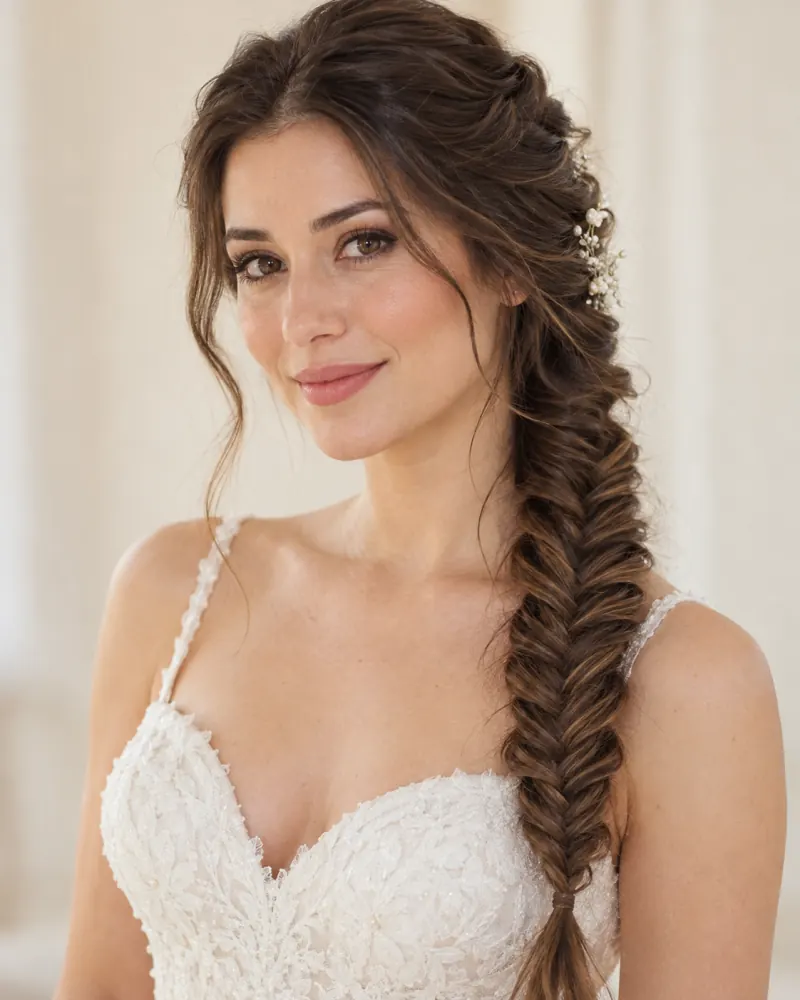
Braided · Long hair
Side fishtail braid
Long hair is gathered in a thin transitional braid on one shoulder. You can carry the same braid to a different atmosphere by keeping the texture on the top plain or loose.
Back to models ↑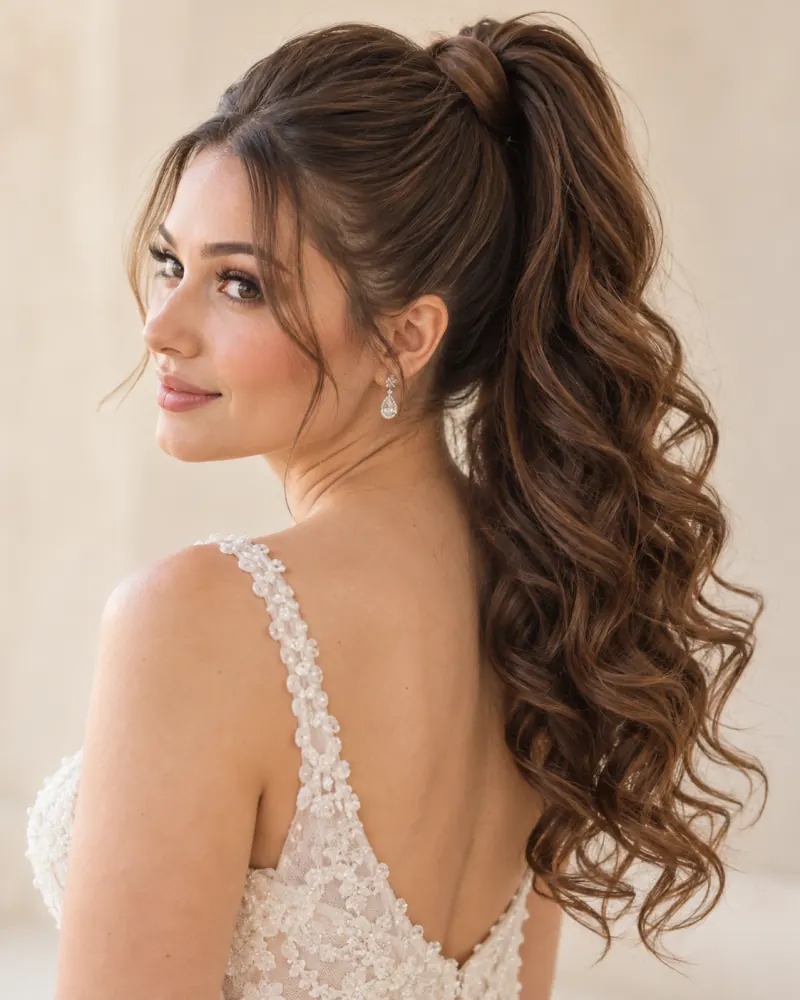
Updo · Movement
Voluminous high ponytail
Hair gathered high is left in long, loose waves. If you want a ponytail with movement rather than a tight bun, consider its volume and fastening point together.
Back to models ↑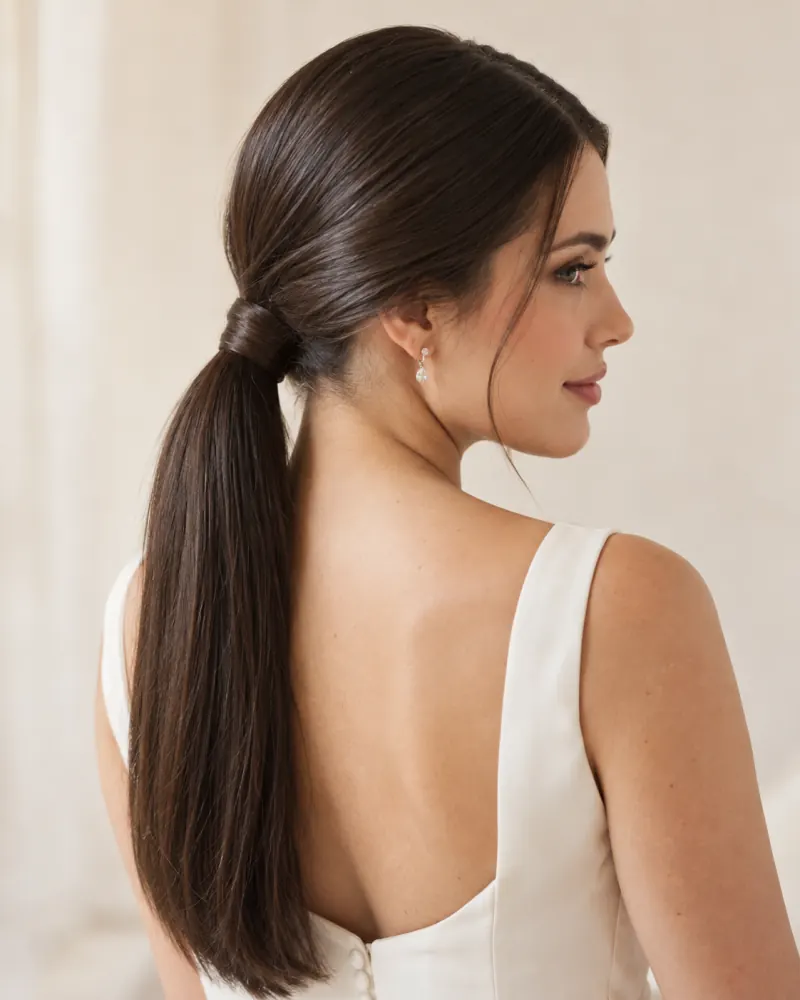
Updo · Minimal
Smooth low ponytail
The hair is joined at the nape of the neck, the connection point can be hidden with a thin strand. The clean line at the top and the straight lengths extending down create a simple silhouette.
Back to models ↑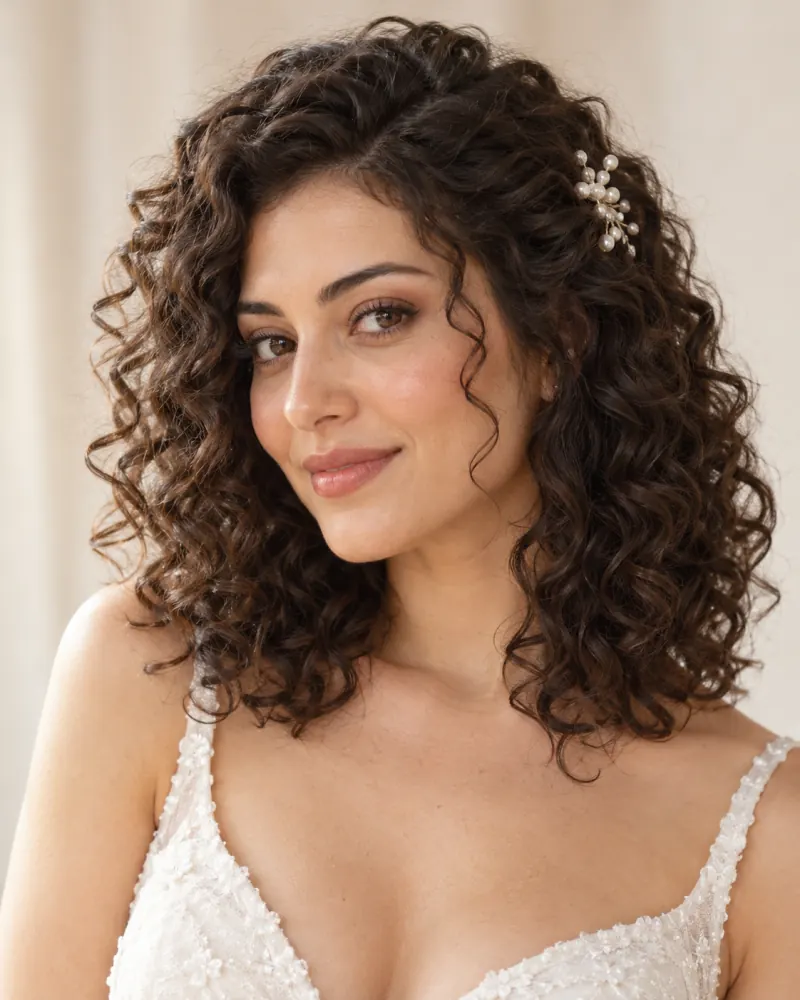
Loose · Curly
Natural curls worn loose
The natural curl pattern of the hair is preserved; A small hair clip or a gather on one side can complete the look. Styling every curl in the same shape is not a requirement for this style.
Back to models ↑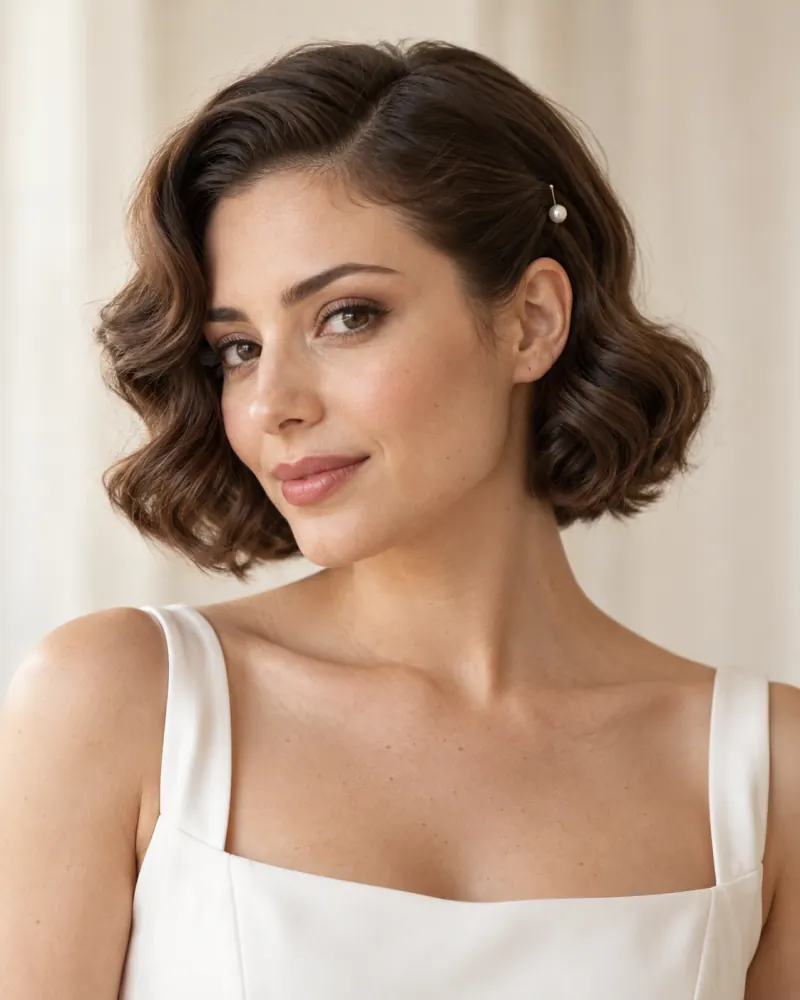
Short · Wavy
Retro wavy bob
The bob, which ends between the chin and the shoulders, is parted to the side and shaped with distinctive waves. It is another option to try the bridal look without growing your hair long or tying it up.
Back to models ↑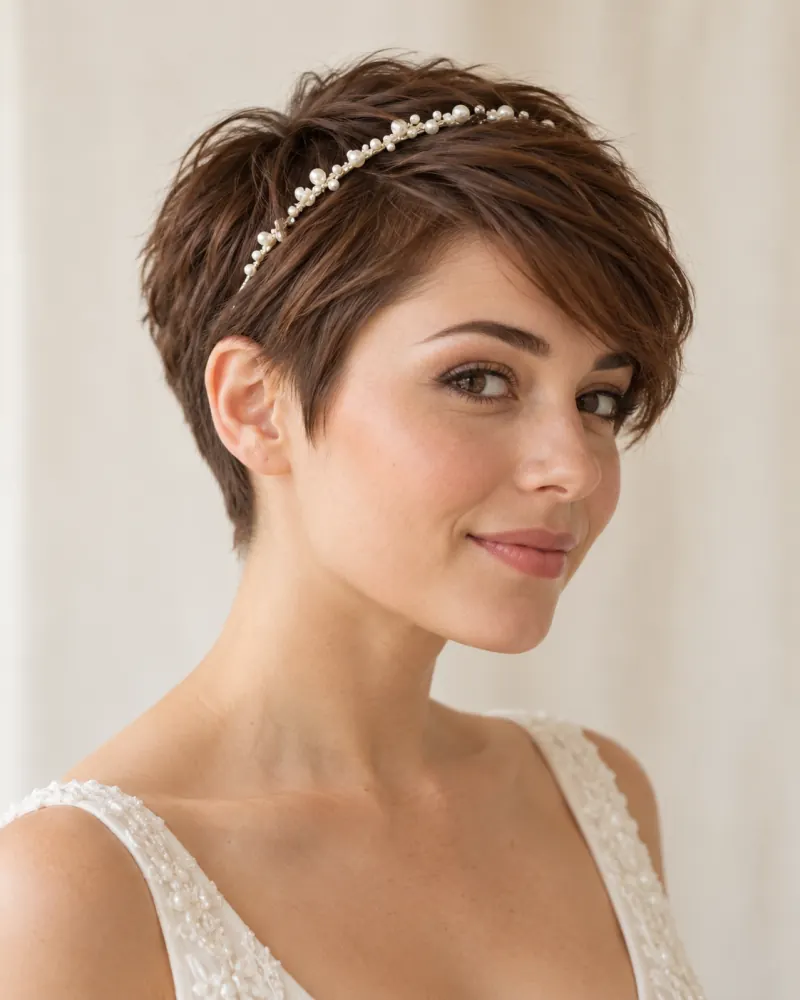
Short · Minimal
Pixie with accessories
The line of the short cut is preserved; A thin hair band or small hairpin sets the focus. Instead of creating a big bun, you might consider adapting your cut for your wedding day.
Back to models ↑Before appointment
Bring more than your inspiration photograph to the hair trial.
Make your hair look beautiful; but also know how it will feel during the day. These little checks may be more helpful than deciding between two similar photos:
- Take along a photo of the neckline and back of your wedding dress, your earrings, veil and hair accessory.
- Photograph the front, side and back views in the same light. Don't judge by looking at the front camera alone.
- Turn your head, sit down and walk a few steps. If there is a feeling of tightness or pulling, mention it at hair trial.
- Show your hair daily texture to your hairdresser; ask if additional hair or different procedures are needed to achieve the volume in the image.
- Plan together the look after removing the veil and what you will do when a minor adjustment is needed.
Check the neckline and veil of the wedding dress during the hair hair trial, and the skirt length with shoes during the dress hair trial. It may not be enough to like individual pieces that complete the look; bridal shoes in the fitting list Decide by trying the movements.