
Planning guide
Wedding Preparation Checklist: A Complete Guide from 12 Months Out to the Wedding Day
Choosing tablecloths before you have a venue, or finishing invitations before the time is confirmed, can mean doing the same work twice. This checklist starts with the decisions that affect everything else, then puts colours, songs and smaller details in a useful order.

How to adapt this checklist to your wedding
Twelve months is not a requirement; it is a planning window that spreads the work out. With six months, some steps can happen in the same week. With eighteen months, you still do not need to decide everything immediately. Give every task an owner, a target date and a clear definition of done . 'Discuss the same photography package with three teams and compare delivery terms' is more useful than 'Look for a photographer'.
If you live in different cities, you may want to combine tastings, venue visits and fittings in one trip. Do not book back-to-back appointments you cannot realistically reach just to fit everything into one day. Allow time for travel and discussing decisions too.
This page is a checklist to read, not a new app that marks tasks or sends reminders. You can copy the items into your own notes. Keep the main document containing dates and payments in one place, sharing only the relevant parts with family and suppliers.
12 months to go: budget, guest count and three priorities
The first month's job is not to design the whole wedding but to narrow the choices. Discuss the city, approximate guest count and what matters most about the celebration. When discussing family contributions, clarify when payments can be made as well as how much.
- Separate the wedding-day budget from other spending such as your home, henna celebration and honeymoon.
- Start your guest draft with names, not just a note that your side has about a hundred people.
- Choose two or three possible dates and your preferred season.
- Write down three priorities, such as easy transport, good music and a leisurely meal service.
- Create a shared filing system for quotes, contracts and payment records.
Resolve differences of opinion before shopping for decorations. A weekend celebration out of town and a single evening in the city bring different transport, guest-count and cost decisions.
11 months to go: see how the venue will actually work
Assess the venue for how it will work with your guest count, not just how lovely it looks empty. How do the ceremony area, dining, dancing, toilets, parking and kitchen-service routes connect? If there is an indoor backup, discuss the same guest count there too.
- Request comparable written quotes for the same date and service package.
- Ask about the minimum charged guest count and the deadline for final numbers.
- Ask when music must finish, the rules for outside suppliers and preparation access times.
- Read the payment, change and cancellation terms in the contract.
The questions in our venue selection guide can help at your meeting. A civil marriage application and a reception booking are separate processes; agreeing with the venue does not confirm the official ceremony time.

10 months to go: choose your main suppliers and agree responsibilities
Start discussing scope with photography, video, music and event teams. Find out what the venue package already includes before buying extra services. The same 'photography package' label can cover different combinations of getting-ready photos, outdoor portraits, the wedding evening and edited delivery.
- Agree photography and video crew numbers, hours and delivery formats in writing.
- Agree with the DJ or band who handles technical setup and sound checks.
- Distinguish the venue coordinator's responsibilities from those of an independent wedding planner.
- Choose a relative or team member who can take calls on your behalf during the day.
Ask what the supplier will need from you at the last minute too. 'We handle everything' does not necessarily include transport, setup, takedown or communication with other teams.
9 months to go: outfits and tasks involving travel
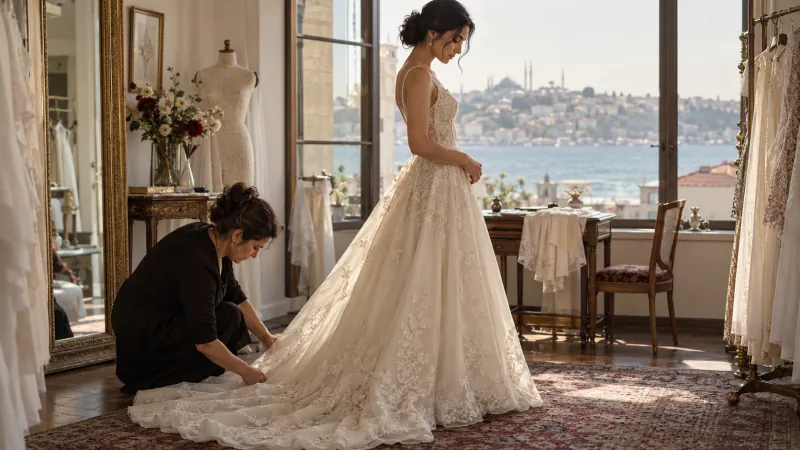
For bespoke, ordered or particular designs, discuss delivery and fitting schedules with the seller. Not every dress takes the same time; there is no universal month when you must buy it. Wear clothes you can move in to appointments, and consider sitting and walking, not just posing.
- Ask about style, delivery, alterations and fittings for the wedding dress and groom's suit.
- Research accommodation for out-of-town guests; do not count people without bookings as confirmed attendees.
- If planning a honeymoon, check leave dates and travel documents.
- If an engagement or henna celebration is on another day, avoid clashes with the main wedding schedule.
Wedding dress cuts and groom's suit styles are useful comparisons when explaining what you want to try at an appointment. Do not assume a style you like in a photograph will feel the same when worn.
8 months to go: turn colour and décor ideas into a practical plan
Narrow your inspiration folder. Instead of ten unrelated beautiful photographs, choose a few things that suit the venue's light and table shape: the main tablecloth colour, chairs, flower height and printed materials. Cream, beige and burgundy can look different under evening lighting.
- Ask for quantities and material samples in the décor quote.
- Use a sample setup to check that centrepieces do not obstruct conversation or service.
- Discuss wind, ground conditions and transport with the event team for outdoor spaces.
- Separate purchases from hired items, and remember collection after the wedding.
Tablecloth, chair and flower combinations in the Workshop let you explore these together. This preview cannot replace fabric samples or a venue lighting trial; confirm your favourite combination using the supplier's actual materials.
7 months to go: transport and the couple's route
If preparations, photos, the ceremony and reception are in different places, map the route now. Do not rely solely on the shortest map estimate; getting out of the car, arranging the dress, unloading equipment and waiting take time too. In busy weekend areas, agree alternative entrances and meeting points.
- Work out whether guests need shuttle transport and the likely stops.
- Discuss waiting time, the driver and stops for the couple's car.
- Check how older guests or those with reduced mobility will reach the entrance.
- If dinner and the ceremony are at different addresses, explain the transfer clearly in the invitation details.
If possible, assess the route on a similar day and time rather than trying it for the first time on the wedding morning. Choosing a wedding car is about more than its appearance.
6 months to go: ask your marriage office about the application process
This month's task is not for everyone to apply six months ahead; it is to learn the current requirements of your own application office. Appointment windows, documents, photograph counts and ceremony arrangements can differ. Do not prepare documents so early that their validity becomes a problem.
- Confirm the authorised office, appointment method and current document list.
- For special circumstances, ask the relevant office rather than relying on the standard list.
- Record the application appointment separately from the confirmed ceremony date.
- Check that the ceremony and reception times printed on the invitation are genuinely confirmed.
Our guide to booking a civil wedding date explains the distinction. Do not upload ID documents, medical reports or official paperwork to the guest list; use the channel required by the responsible authority.
5 months to go: menu, hair, make-up and fittings
At a menu tasting, discuss not just flavour but the number of courses and how service intervals fit the schedule. If possible, bring your veil, accessories and a photograph of your outfit's neckline to your hair and make-up trial. When sharing inspiration, be clear about your hair length and expectations.
- Agree menu alternatives and any children's menu arrangements.
- Ask the catering team who assesses food allergies and dietary requests, and how.
- Match the hair and make-up location and preparation time to your transport plan.
- Discuss wedding ring selection, sizing and delivery.
Do not circulate guests' health details in a large WhatsApp group. With their permission, share necessary information only with the relevant professional. Do not try to guarantee as a couple that one menu suits everyone.
4 months to go: invitation wording and key music moments
Before designing invitations, prepare the spelling of names, date, any explanation of two different start times, venue name and address. Ask someone else to open the location link and check it shows the correct entrance. Decorative lettering may suit names, but should not make the address and time hard to read.
- In the invitation editor, prepare the design and check it on a phone and in a test print.
- Count printed invitations by household and plan digital sending with a recipient list.
- Choose music moments such as the entrance, first dance, cake cutting and closing.
- Note unwanted songs or unsuitable versions separately.
In the music planner, you can organise songs by section. Giving the list to your team does not replace discussing where each recording should begin and end. Listen through a final example together.

3 months to go: send invitations and collect replies in one place
Time invitations around guests' travel needs. Someone coming from another city may need earlier notice for leave and accommodation than a local guest. There is no required number of days for everyone; set a reply schedule that meets the venue's final-count deadline.
- Record what was sent to whom and whose reply is still due.
- Do not estimate attendance from just the first name in each household.
- State the reply deadline and how guests should contact you.
- Check samples for favours, printing and personalised items.
A delivered message does not confirm attendance. Verify replies by phone, message or your chosen channel. Sending a digital invitation does not automatically collect responses. Keeping unconfirmed names separate reduces last-week confusion.
2 months to go: draft your seating plan
Ask the venue for usable dimensions, columns, the stage, entrances and fixed equipment. Calculate tables and chairs first, then plan routes for the venue team to approve. The dance floor and service routes are not spare space for extra tables later.
- In the table calculator, compare guest numbers and table capacity.
- In editor create the draft and transfer names with checks.
- Compare the total with expected attendance to spot anyone added twice.
- Work towards finalising fittings, shoes and accessories.
The seating plan may still change, so do not immediately print all the place cards. Verify the list first. Match capacity to the actual chairs guests will use so tables are not overcrowded.
1 month to go: final numbers, printed items and the running order
Follow up with guests who have not replied. Put the venue's contractual final-count deadline in your calendar rather than assuming it is automatically one month before. Discuss the cost and seating solution for late additions with the venue.
- Check names and table numbers against one master list.
- Confirm consistent spelling across menus, table numbers and place cards.
- Share the order of photos, entrance, ceremony, service, dancing and cake cutting with suppliers.
- Match remaining payments to amounts and due dates.
- Confirm the weather backup and how guests will hear about a venue change.
The running order should answer who starts each moment and whom they contact, not just give times. Whoever starts the entrance song needs to know who will tell them the couple is ready at the door.
The final week: turn decisions into handover notes
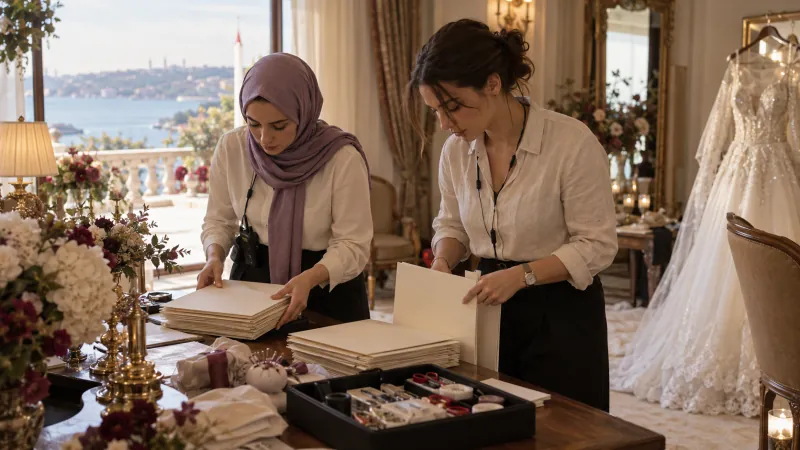
Do not fill this week with new design ideas. Focus on final table numbers, vehicle times and boxes to deliver. Labelling every box with its contents and destination is easier than explaining it again by phone.
- Ask each supplier to reconfirm the date, address, entrance and contact person.
- Save the final seating plan and prepare any printed or offline backup needed.
- If using QR table finding, test the actual link on different phones and set aside a printed backup.
- Prepare outfits, rings, accessories, comfortable spare shoes and a small repair kit.
- Assign responsibility for boxes, the car and items to collect the next day.
When testing the QR code, check not only that it opens but that a sample name leads to the correct table. Have a helper and a readable list for guests with internet or phone problems.
The wedding day: let the plan do the work, not the couple
Do a brief morning check: are teams, addresses, times and special deliveries ready? Then hand operational calls to your chosen person. You should not have to correct every table number or give every supplier directions yourself.
- Leave realistic transition time between preparations and journeys.
- If the running order changes, make sure music, photography and service teams all receive the same update.
- Agree who coordinates decisions if weather or technical problems arise.
- Have the assigned person check personal belongings, hired items and handovers at the end of the night.
After the wedding, close out photo delivery, hired-item returns and outstanding payments. For official procedures such as name or address changes, our post-marriage procedures guide can help; verify the requirements for your circumstances with the relevant authority.
If you have only three or six months left
First review your budget, date, venue, official ceremony process and main suppliers in the same week. Handle connected appointments in parallel, but avoid hard-to-reverse spending such as printing before the date is confirmed. With a short schedule, fewer choices make the biggest difference.
Consider an outfit with confirmed delivery instead of bespoke work, one photo location instead of many stops, or simple printing instead of elaborate personalisation. These are ways to simplify decisions when time is short, not requirements. Do not assume a service is a quick solution until the seller confirms it can be ready.
Keep the order: bookings and scope first, design next, then confirmations and delivery. Instead of doing everything at once, ask which next task today's decision unlocks. That makes the schedule easier to manage.
Frequently asked questions
How many months before the wedding should preparations begin?
Twelve months is an example that spreads the work out, not a required lead time. Venue and supplier availability, bespoke production and travel needs shape your own schedule. With less time, resolve the date, budget and main bookings first.
What should you do first when planning a wedding?
Discuss what the budget covers, approximate guest numbers, city and possible dates together. These decisions change your venue search and how you compare quotes.
Must the civil marriage application be made exactly six months ahead?
There is no single schedule for everyone. Ask your application office about appointments, documents and dates; separately check document validity and confirmation of the ceremony date.
When should you prepare the seating plan?
Start a draft when you know venue dimensions and approximate numbers. Revise it as guests confirm; align the final version with the venue's final-count deadline and printing schedule.
Can I count a guest as confirmed once the invitation is sent?
No. Sending a message is not an attendance confirmation. Verify numbers through your chosen reply channel and track people who have not replied separately.
What should take priority in the final week?
Final numbers, seating, supplier timings, payments and deliveries, the weather backup and handing over responsibilities. Check the QR link you will use and its printed backup at this stage too.