
BRIDAL FLOWER / BOUQUET GUIDE
Bridal bouquet styles:
how should it look in your hand?
The bouquet you love in a photo may seem too big when you hold it in your hand. Or a bunch of tulips that you find plain, when combined with your wedding dress, becomes exactly what you are looking for. The initial question is just "which flower?" not: do you want a collected round, a free bundle, a form extending downwards?
Here you can compare 10 bridal bouquets with their shape, color and trial details. Choose two models you like; then take it to the florist with your wedding dress photo and wedding day program.
Where to start when choosing a bridal bouquet?
First, determine the form and the size you can comfortably carry; then choose the flower type and color. The same white rose looks more collected in a round bouquet and more natural in an open bunch. Separating why you like the photo you like makes it easier to explain the order.
Full and round
Roses, peonies or hydrangeas can create a more defined outline. As the diameter increases, check how much of the front of your dress it covers.
Loose hand-tied bouquet
With tulips, daisies or mixed garden flowers, the stems and spaces remain visible. Just because it looks natural does not mean that the binding is sloppy.
Long-stemmed or trailing
Calla lilies can create a long line; orchids can bring a trailing movement. Try holding the bouquet while using stairs and sitting down too.
If your wedding dress is not yet determined, do not finalize the bouquet immediately. Wedding dress cuts and fabrics When comparing, consider how much the bouquet will cover the front body. Your choice of hair accessory sums up details taken independently of each other, seeing them in the same image.
01 / BRIDAL BOUQUET
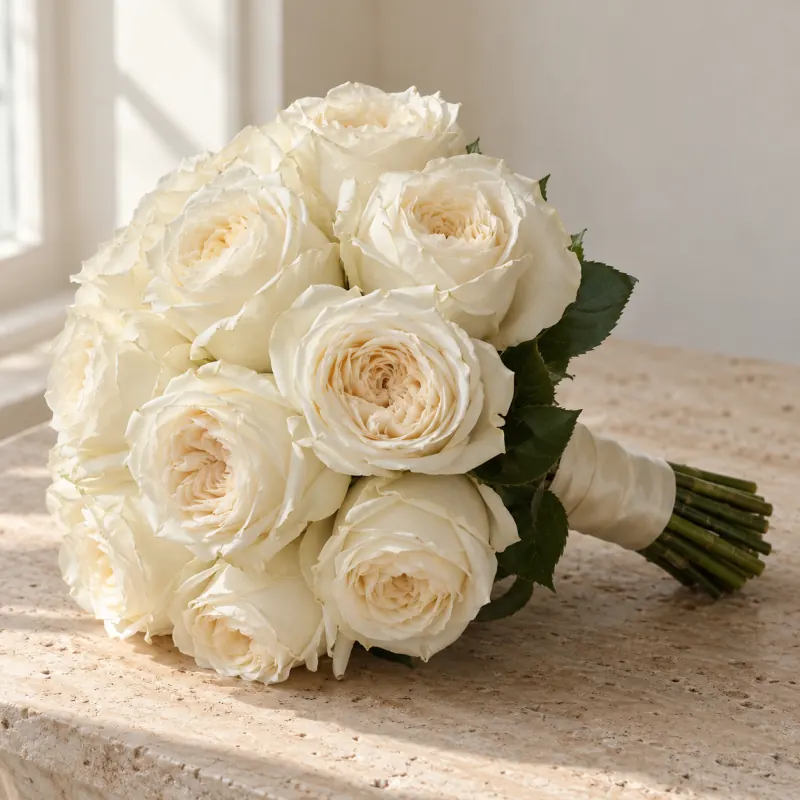
White roses: bunched and round bouquet
You see the outline of the bouquet before the flower itself: when white roses sit close together, a neat, monolithic form is created. If you're looking for a bouquet that doesn't steal your attention from the embroidery on your wedding dress, this form is a good start. When the same roses are tied more loosely, a completely different design that gives the feeling of a garden flower emerges.
- Format
- Round, with short stems and together. Instead of a very large sphere, think of a size you can comfortably grasp.
- Color mapping
- Compare pure white and off-white next to the fabric of the wedding dress; do not accept the white color in the screenshot as a measurement.
- Try together
- Plain ribbon on a lace or stone wedding dress; slightly lighter rose heads in a plain satin pattern.
Ask the florist
Do not write only “white rose” on the order. Clarify the degree of openness of the rose, the diameter of the bouquet, the amount of visible greenery and the ribbon on the sample.
02 / BRIDAL BOUQUET
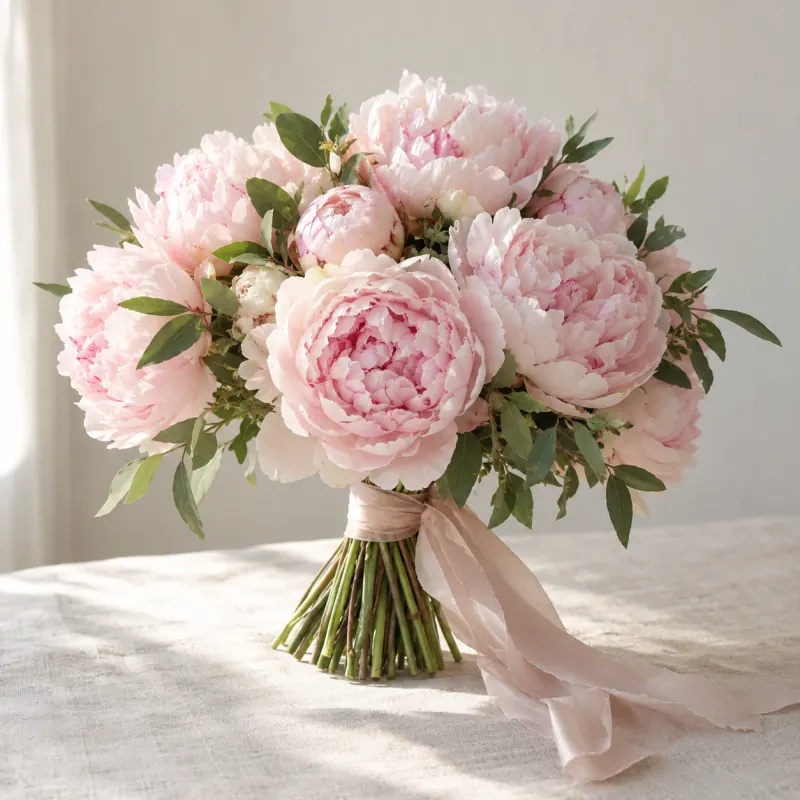
Powder peony: a soft, layered look
A peony's layered petals give even a small bouquet a full appearance. Pairing a blush shade with the white of your dress does not mean designing an entirely pink wedding. You can leave it as a single colour accent and keep your hair accessory and shoes quieter.
- Format
- A soft round shape with naturally spaced flower heads, rather than a rigid ball.
- Color mapping
- Powder, cream and a hint of pale green. If you are going to mix several shades, choose the dominant color first.
- Try together
- Compare petal texture with tulle or plain satin; look at the wedding dress with heavily embroidered front body by reducing the size of the bouquet.
Ask the florist
Ask whether peonies will be available on your date and how the open-flower look will be achieved. Ask them not to substitute an alternative without your approval if availability changes.
03 / BRIDAL BOUQUET
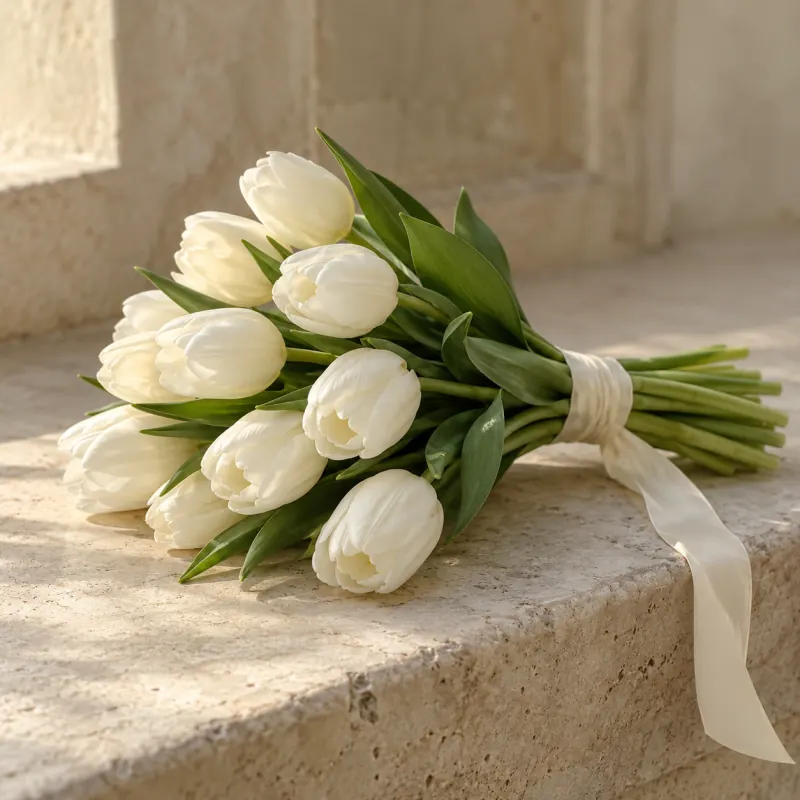
White tulip: a small, flowing bunch
The detail that makes tulips interesting is that they do not all point perfectly in the same direction. A few gently separated stems can add movement to a simple civil-ceremony dress. For an uncluttered look, discuss using the tulips' own green leaves rather than lots of filler flowers.
- Format
- Small hand bouquet; some of the flowers may appear closed and some may appear more open.
- Color mapping
- White-green duo or a single pastel tone. Keeping the ribbon short simplifies the line.
- Try together
- Midi wedding dress, straight cut wedding dress and a non-obvious hair accessory.
Ask the florist
Fresh tulip and artificial “wet tulip” are not the same material. Print clearly which one to use in the quote; if possible, view the sample in hand and in daylight.
04 / BRIDAL BOUQUET
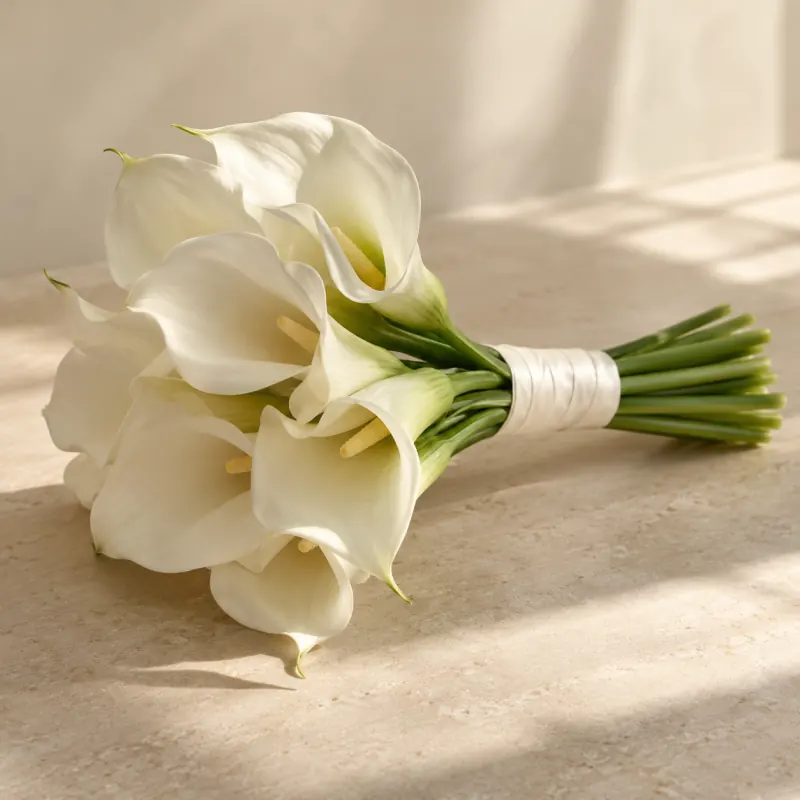
Calla lily: a long-stemmed, sculptural bouquet
calla lily establishes the look with a few clear lines instead of lots of small flowers. When tied with a long stem, holding the bouquet upright in front of the body looks different than carrying it on the arm. Before choosing the form in the photo, try whichever one feels comfortable to you; the bouquet will be in your hand throughout the ceremony.
- Format
- Long and narrow; the handles are a visible part of the design.
- Color mapping
- Cream-white flowers and green stems; try a matte finish instead of a shiny ribbon too.
- Try together
- Plain satin, statement neckline or a simple jumpsuit. Make sure that the wedding dress does not cover any special details on the front.
Ask the florist
Do not order calla lilies and lilies as if they were the same flower. Share the flower photograph and desired stem length; ask your florist about contact between the stem ends, binding and your clothes.
05 / BRIDAL BOUQUET
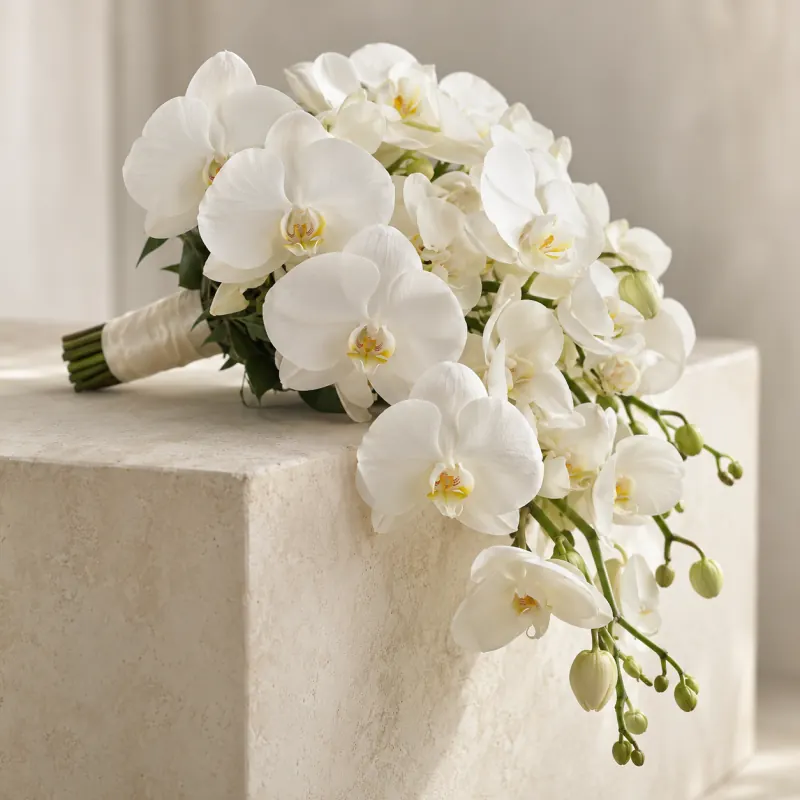
Orchid: a softly trailing, flowing bouquet
When you think of a hanging bouquet, do not think of a very large and heavy arrangement. A lighter line can also be established with a few downward branches of the white orchid. Just looking at the front photo is not enough here: you also want to see the side view, the stem section and how close the flowers are to the skirt.
- Format
- A gradual line that is more concentrated at the top and tapers at the bottom.
- Color mapping
- White and cream; the shape already brings movement, so you can keep extra colour to a minimum.
- Try together
- A simple long-skirted dress. If it has lace or a train, check where the trailing bouquet meets that detail.
Ask the florist
Ask about flower variety, trailing length and visible joins. Choose a bouquet balanced from different angles rather than one whose flowers need turning forwards as you carry it.
06 / BRIDAL BOUQUET
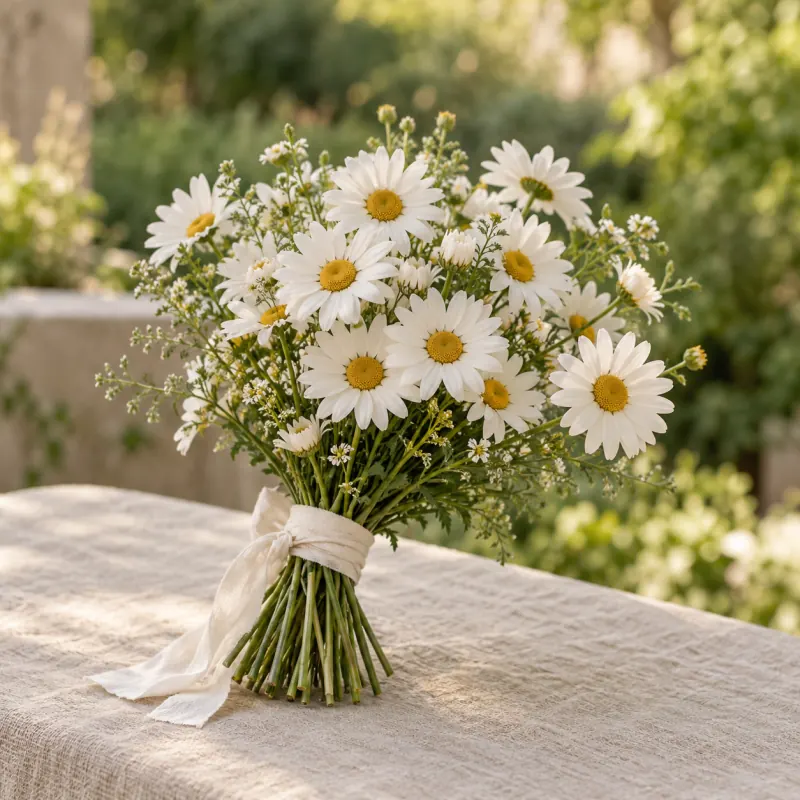
Daisy: a small, cozy country bouquet
The charm of daisies is not in filling every gap. Letting fine stems and small flowers breathe brings the bouquet closer to an everyday bunch. You can use it at a large wedding too; the bouquet does not have to become showier as the guest count rises.
- Format
- A small or medium-sized, loosely tied hand bundle.
- Color mapping
- White-yellow and green; A more matte look with natural cotton ribbon.
- Try together
- A light wedding dress, short veil or a simpler wedding look.
Ask the florist
Instead of asking for 'a small flower like a daisy', request a photograph of the actual variety. Check that the bouquet stays in your hand without slipping and that the stems are easy to hold.
07 / BRIDAL BOUQUET
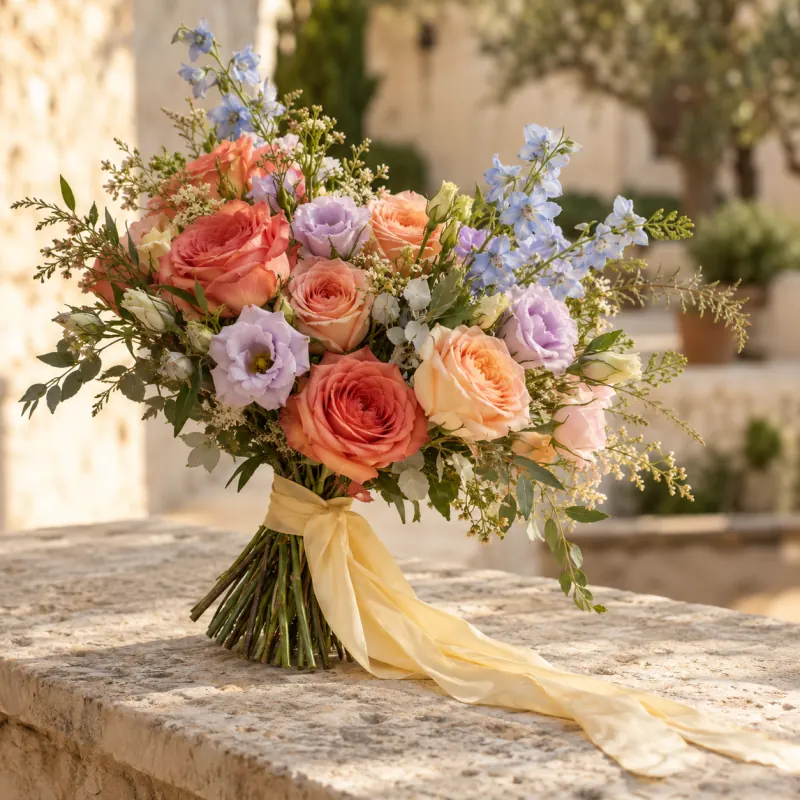
Mixed garden bouquet: colorful and free form
In this model, it is more useful to create a small color palette instead of gathering all the flowers you like one by one. Think of peach as the main color, lilac as the secondary color, and blue as a small accent. This way, the bouquet looks free but does not turn into a messy list of colors.
- Format
- A balanced hand bouquet with different heights, slightly more open on one side.
- Color mapping
- A dominant, an auxiliary color, and a minor third accent. It is not necessary to use each color in equal amounts.
- Try together
- A colour accent with a simple dress; if you have a floral hair accessory, compare them in the same photograph.
Ask the florist
Send not only a mood board to the florist, but also the colors you don't like. Write separately which flowers may change and which will definitely stay.
08 / BRIDAL BOUQUET
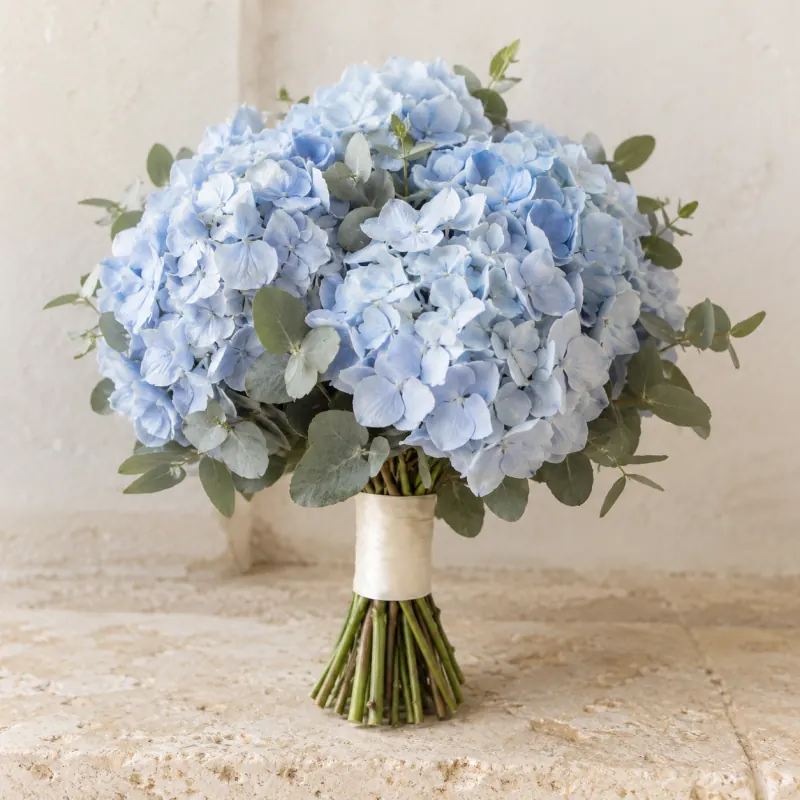
Blue hydrangea: one colour, a generous surface
The numerous small flowers of the hydrangea read from afar as a larger color surface. In a light blue bouquet, this effect is evident: you see a single, calm field of color against the white wedding dress. Even if you like the volume in the photo, do not decide on the size without carrying a trial bundle.
- Format
- Round and full; it can be complete without adding lots of foliage around the edge.
- Color mapping
- Powder blue, cream and slightly green. Look at the fabric in both shade and sunlight.
- Try together
- A solid color wedding dress with a small blue detail; it is not necessary to bring every accessory to the same tone.
Ask the florist
Explain the outdoor shoot, ceremony and waiting time to the florist. Take the transport and holding recommendation according to the flower used; don't assume you'll spend the whole day looking the same.
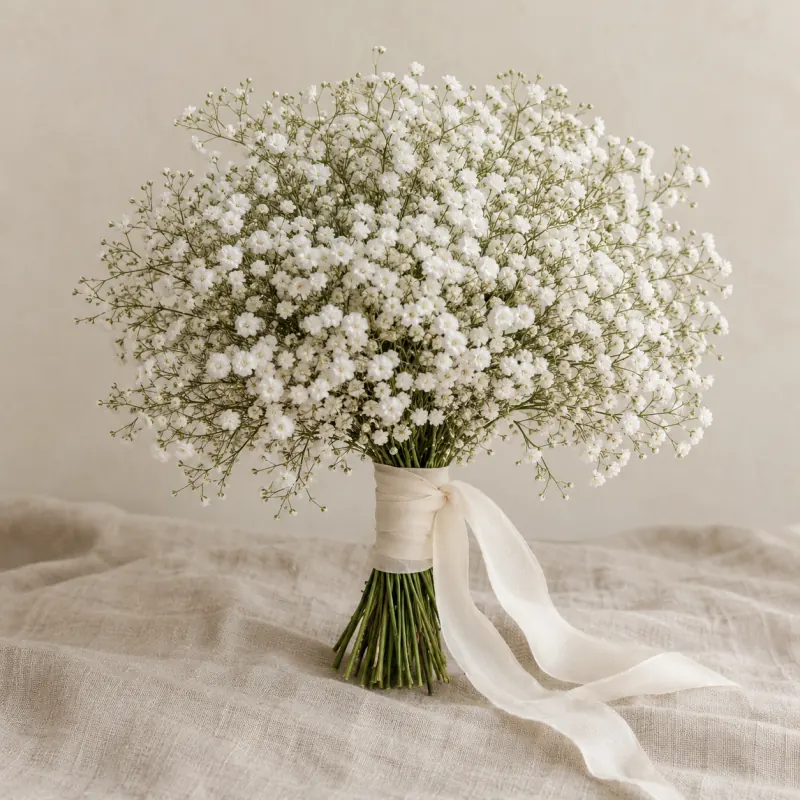
09 / BRIDAL BOUQUET
Cipso: cloud-like bouquet with thin branches
Baby's breath need not just fill the gaps between larger flowers. Used alone, its tiny white dots create a more open texture. Tied very tightly, it looks denser; left looser, its fine branches become more visible.
- Format
- A thin branched bunch, close to round but without hard edges.
- Color mapping
- White and natural green; you can highlight the handle with a prominent ribbon.
- Try together
- Small wedding bouquet or a romantic tulle wedding dress. Check to see if the texture is getting crowded with the dense lace.
Ask the florist
Do not confuse fresh, dried and artificial baby's breath samples. See a close-up made with the actual materials; agree the flower density and diameter before discussing the price.
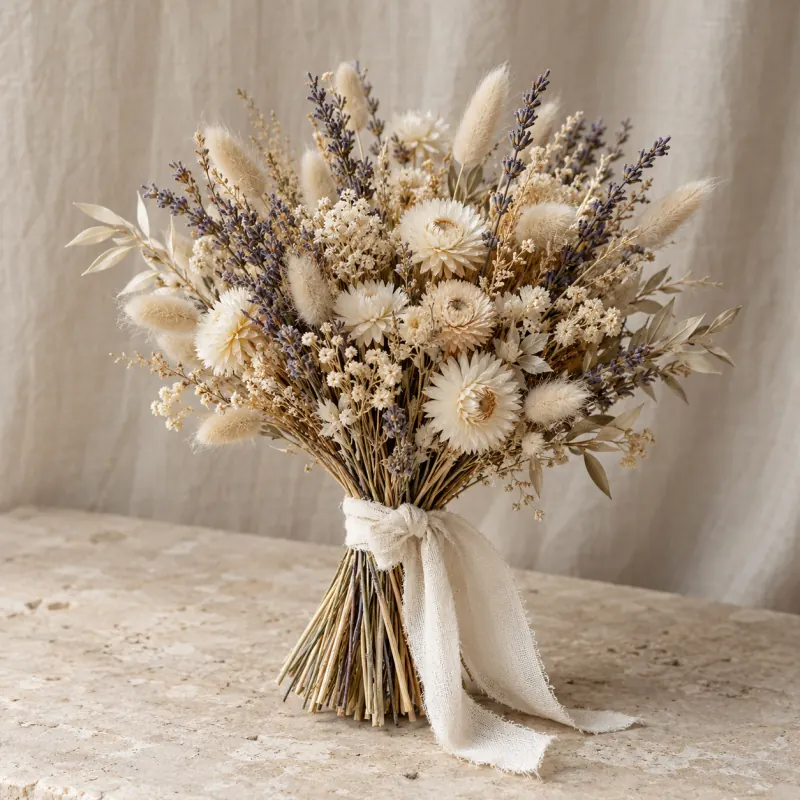
10 / BRIDAL BOUQUET
Dried flowers: matte colours, distinctive textures
It is not only the beige color that makes the difference in dried flowers; the shiny surface of fresh flowers is replaced by matte and papery textures. Working with a small number of different ingredients prevents the bouquet from turning into a giant bunch of weeds. If your wedding dress is plain, you can brighten up the look with some lilac or cinnamon tones.
- Format
- Small-medium sized bunch with visible stems and several different heights.
- Color mapping
- Cream, sand, pale lilac; if you do not want intense white paint or glitter, specify this specifically.
- Try together
- Matte fabric, simple lace and a countryside wedding. See the straw, tassel and dried flower together before propagating them at the same time.
Ask the florist
Dried, preserved and artificial flowers are different materials. List them separately in the quote; ask about shedding, packaging and storage. Do not treat a promise that it 'never deteriorates' as a product guarantee.
Living, artificial, dry: not the same image, not the same material
You may not be able to tell for sure that the flower in the inspiration photo is fresh from its appearance. Also print the material type instead of “bridal bouquet” in the order. Especially when you hear expressions such as "wet tulip" or "shocked flower", ask to see the product you will receive closely.
Fresh flowers
Color and degree of lightening may differ from the example. Get the delivery time, waiting, water contact and transportation recommendations according to the flower used. Do not apply the same care recipe to every bouquet.
Artificial flower
Check leaf edges, stem joints and surface shine in different light. Rather than relying on 'lifelike', ask for a sample and see it close up.
Dried or preserved
Don't consider the two as one material. Ask what treatment was done on the package, spillage and storage conditions. If you want to keep it as a souvenir, state this expectation up front.
Consider season, location and shooting schedule together
Confirm with the florist what color and quality the flower you like will be available on your wedding date. If there is a species that requires import or special supply, determine your alternative in advance. Instead of just saying "spring wedding", it would be more useful to give the date and delivery location; There are not the same supply conditions in every city.
If your schedule includes morning outdoor photos, an afternoon civil ceremony and an evening reception, explain the waiting and travel times. Exterior shooting concept choosing how to keep the bouquet in the photo; while visiting the place too, and note who will receive the delivery. Rather than leaving the bouquet in a car in the sun, ask your florist for care advice suited to its materials.
The bouquet and the table flowers do not have to be exactly the same. Cover, chair and flower in the vase in the Workshop you can find a color direction by trying together. This display is not a guarantee of a bridal bouquet order or actual flower color; a preview to consider the tone of the whole.
Short list of orders you can send to the florist
Add these notes to your two inspiration photos. Separate the details you do not want to be changed and the points where you are flexible; you will reduce receiving very different offers for the same image.
- Date and delivery: the day, delivery window, address and recipient.
- Material and type: fresh, artificial, dried or preserved; the main flower and an approved alternative.
- Form and size: approximate diameter, stem length and the end point of any trailing section.
- Color and binding: main color, unwanted tones, ribbon color and length.
- Scope: Is a boutonniere, hair flower or second bouquet included for tossing?
- Quote and changes: delivery fee, total amount, final confirmation and notification method for material changes.
For example, saying "I want a bunch of white, small tulips; I want fresh flowers. Let the green leaves show, keep the ribbon short. Ask me before enlarging the diameter in the photo" is a clearer description than sending a single image.
Frequently asked questions about bridal flowers
How to choose the bridal flower?
Start with the bouquet's shape and the size you want to carry. Then consider the flower variety alongside your dress fabric, wedding-day schedule and colour palette. Make the final decision using an example held in your hand, not just a close-up photograph.
Fresh, artificial or dried bridal flowers?
Natural texture, supply and care in living flower; close-up view of the material and workmanship in artificial; In the dry, texture, shedding and packaging come to the fore. Compare the options with the real example without turning the long program into an artificial “you must choose” rule.
Does a white wedding dress need a white bouquet?
No. You can choose white, pastel or stronger colours. See the fabric of the wedding dress and the bouquet in the same light; evaluate the tone difference of white and off-white side by side, not on the photo screen.
How big should the bridal bouquet be?
There is no one size fits all. Start with a size that feels comfortable in your hand, does not unintentionally cover the detail on the front body, and does not strain you when walking. Print approximate diameter and handle length on the order.
When should you order your bridal bouquet?
Speak to your florist once you know your wedding date and preferred design. Agree the final order deadline, sourcing and delivery time with them; do not rely on one lead time for every flower and city.
What to look for when comparing bouquet prices?
Check whether the flower varieties, quantities, diameter, ribbon, labour, boutonniere, any second bouquet and delivery are included on the same basis. Do not compare a starting price given before the date and materials are agreed as though it were a final quote.
Separate the two models, try one in hand.
Don't read the list as a selection where you have to love every flower. It is enough to identify the two forms that leave you undecided. Then the fabric, size and wearing feel often make the rest of the decision easier.